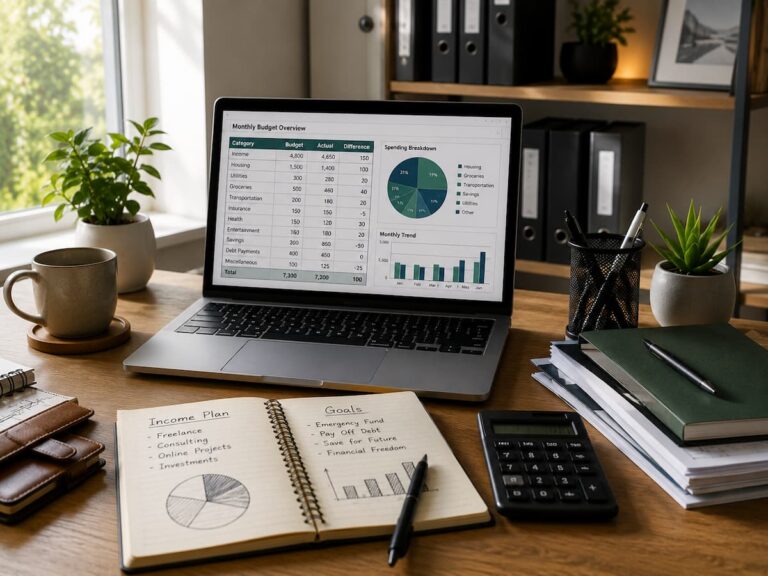

Personal Budgeting for Beginners: A Practical Guide to Managing Money Every Month
Managing your monthly finances can get complicated when income, bills, unexpected expenses, and personal goals clash. Many people know they should create a budget but put it off, thinking it means giving up everything they want or constantly tracking every tiny expense. In reality, a good budget doesn’t restrict your life; it is a simple way to track your spending and make informed decisions.
Without a strategy, you might wonder where your income goes, struggle to save, or have to rely on credit cards for unexpected expenses. A personal budget can help you organize your finances, reduce stress, and achieve your goals. This beginner-friendly guide explains the concept of budgeting, how to create a monthly budget, how to avoid mistakes, and how to develop easier financial habits. Whether you are starting your first job, trying to get your spending under control, preparing for future goals, or simply want a more profound understanding of your finances, learning basic budgeting skills can help you make better choices each month.
Knowledge of Your Financial Situation
Budgeting is one of the most important financial skills because it empowers you to make informed decisions before financial problems arise, rather than reacting passively. Many financial issues stem from spending money haphazardly without clear goals. A budget simplifies the relationship between income and priorities. It clearly shows how much money is available, which expenses are necessary, which ones can be reduced, and how much can be saved for the future. Even the simplest budget provides a clear picture of your finances.
Imagine someone earns €3,000 a month. Without a budget, that person might unconsciously spend money on bills, groceries, online shopping, and entertainment. At the end of the month, they might be surprised to discover very little money left. A budget allocates funds to key expense categories before you start spending. Budgeting is just as important during uncertain times. Without financial planning, unexpected car repairs, medical costs, job changes, or household expenses can all cause stress. A well-planned budget helps you save money and reduces stress.
A budget is not a punishment; it is a tool to guide your financial decisions. Beginners often think budgeting requires complicated spreadsheets or professional financial knowledge. However, simple budgets generally work best. Consistency is key. A simple monthly budget is far better than complex, hard-to-manage strategies.
Understanding Your Finances
Before creating a budget, it is essential to understand your finances. Many people set spending limits without fully grasping their income and expenses, leading to unrealistic plans that are difficult to stick to. Start by mapping out your income and expenses. You can factor salary, freelance earnings, business profits, investment returns, and other payments into your monthly financial picture. Everything from rent to coffee and subscriptions counts as an expense. A financial overview doesn’t have to be complicated. Gather your most recent bank statements, bills, and payment records. Map out your spending patterns from the past month or two. Your goal is to understand your spending habits, not to judge them.
| Financial Area | Examples | Why It Matters |
|---|---|---|
| Income | Salary, freelance payments, side income | Shows the money available each month |
| Essential Expenses | Housing, utilities, groceries, transportation | Covers basic needs |
| Flexible Spending | Entertainment, shopping, eating out | Shows areas where adjustments are possible |
| Financial Goals | Savings, debt payments, investments | Builds future stability |
One common mistake beginners make is ignoring irregular expenses. Some costs do not happen every month but still affect your finances. Examples include annual insurance payments, holiday spending, home repairs, or vehicle maintenance. A strong budget accounts for these expenses by setting aside small amounts regularly.
Creating Awareness Before Making Changes
Many people immediately try to cut spending when they start budgeting. However, the first goal should be awareness. You cannot improve something you do not understand. For one month, simply track your spending without making major changes. Write down purchases or use a budgeting app to categorize expenses. This process often reveals surprising patterns, such as spending more on subscriptions than expected or making frequent small purchases that add up over time. Once you understand your habits, you can make decisions based on real information instead of guesses.
Setting Realistic Budget Goals
A budget works best when it supports your personal goals. Creating a budget only because you feel you “should” often makes the process frustrating. Instead, connect your budget to things that matter to you. Your goals may include building an emergency fund, paying off debt, saving for education, preparing for a large purchase, or simply having more control over monthly spending. Clear goals give your budget a purpose and make it easier to stay motivated. Beginners sometimes create goals that are too aggressive. For example, someone may decide to save half of their income immediately without considering their actual expenses. While saving more is positive, unrealistic targets can cause frustration and lead people to abandon budgeting completely.
| Goal Type | Example | Beginner Approach |
|---|---|---|
| Short-Term Goal | Save $500 for emergencies | Set aside a small amount each paycheck |
| Medium-Term Goal | Save for a vacation or major purchase | Create a dedicated savings category |
| Long-Term Goal | Retirement planning | Build consistent saving habits over time |
A useful budgeting goal should be specific and measurable. Instead of saying “I want to save more money,” create a clearer goal such as “I want to save $100 every month for emergency expenses.” This makes progress easier to track.
Expert Tip: Start with small improvements that you can maintain. A simple budget habit repeated every month creates stronger results than a perfect plan followed for only a few weeks.
Calculating Your Monthly Income and Expenses
Once you understand your financial condition and set goals, you want to do some calculations using the actual data on a monthly basis. This provides a basis for your budget. What you take home is your after-tax income. A more realistic picture is given by using your net income, as this is the money available to spend and save.
“After that, write down your expenses. Organize them by group type to make them easier to understand. Common categories include housing, food, transportation, health care, debt payments, personal spending, entertainment, and savings. Most newcomers underestimate small expenses because individual purchases seem so modest. Five dollars for a coffee a day may not seem like much, but the total adds up over a month. The idea is not to eliminate every minor pleasure but to comprehend how various decisions affect your entire financial situation.
The given statistics are simply examples. Everyone’s budget will appear different because of income, geography, obligations and personal goals. One of the most typical budgeting mistakes is that people create a plan based on ideal behavior, not real conduct. If you spend money consistently on hobbies or social activities, include those categories in your budget. A budget that completely overlooks your lifestyle is harder to stick to than a realistic budget.
Ideal Budgeting Technique for Starters
There is no single budgeting approach that is right for everyone. The finest method is what you understand and can follow regularly. Many beginners mistakenly believe that a complicated system is preferable because it is detailed. In practice, simplicity tends to produce greater long-term results.” Different budgeting techniques provide varying amounts of organization. Some want to keep track of every single category in detail, while others like to get an overview of income, expenses, and savings. Knowing the main techniques might guide you in choosing a system that suits your personality and financial position.
| Budgeting Method | How It Works | Best For |
|---|---|---|
| 50/30/20 Method | Divides money into needs, wants, and savings | Beginners who want a simple structure |
| Zero-Based Budget | Every dollar receives a planned purpose | People who want detailed control |
| Pay Yourself First | Savings are moved aside before spending | People building savings habits |
| Cash Envelope Method | Uses spending limits for specific categories | People who overspend easily |
The 50/30/20 Budgeting Approach
The 50/30/20 method is popular among beginners because it provides a simple guideline. It suggests using around 50% of income for essential needs, 30% for personal wants, and 20% for savings or debt payments. These percentages are not strict rules. Someone living in an expensive area may need more than 50% for housing, while another person may be able to save more than 20%. The purpose of this method is to create balance, not to create pressure.
Zero-Based Budgeting Explained
A zero-based budget means your planned income minus your planned expenses equals zero. This does not mean you spend all your money. It means every dollar has a purpose, including savings and future expenses. For example, if you earn $3,000 per month, you decide in advance how much goes toward rent, groceries, transportation, savings, entertainment, and other categories. The remaining amount is assigned rather than left without a plan.
Tip: The best budgeting method is the one you will still use six months from now. Choose consistency over complexity.
How to Create Your First Monthly Budget
Creating your first budget does not require special software or advanced financial knowledge. A notebook, spreadsheet, or budgeting application can work. The important part is following a clear process. Start by writing your monthly income at the top. Then list all essential expenses, including housing, utilities, food, transportation, insurance, and minimum debt payments. Thereafter, add savings goals and personal spending categories. Your first budget is not expected to be perfect. It is a starting point that improves as you learn more about your spending habits.
Simple Steps to Build a Monthly Budget
- Calculate your total monthly take-home income.
- List all regular expenses and financial commitments.
- Create categories for flexible spending.
- Add savings as a planned expense.
- Compare your planned spending with your income.
- Adjust categories until the budget feels realistic.
- Review the results at the end of each month.
One overlooked detail is planning for irregular expenses. Instead of waiting for these costs to appear, create a category called “future expenses” or “annual expenses.” You can contribute a small amount every month and avoid financial surprises later. For example, if you spend $600 every year on vehicle maintenance, setting aside $50 per month creates a smoother experience than trying to find the entire amount when the repair happens.
Managing Fixed and Variable Expenses
Understanding the difference between fixed and variable expenses helps you make better budgeting decisions. Fixed expenses usually remain similar each month, while variable expenses can change depending on your choices.
| Expense Type | Examples | Budgeting Approach |
|---|---|---|
| Fixed Expenses | Rent, loan payments, insurance | Plan these first because they are predictable |
| Variable Expenses | Food, entertainment, shopping | Create limits based on your priorities |
| Occasional Expenses | Repairs, gifts, yearly fees | Save monthly to prepare ahead |
Many beginners focus only on reducing small purchases while ignoring larger financial commitments. While controlling daily spending can help, reviewing major expenses often creates bigger improvements. For example, reducing an unnecessary monthly subscription saves money, but finding a more affordable insurance plan or adjusting a high-cost service may create larger monthly savings.
Finding Spending Areas to Improve
The goal of expense management is not to eliminate everything enjoyable. A healthy budget includes room for hobbies, entertainment, and personal choices. The purpose is making sure these expenses fit within your financial plan. A useful question to ask before spending is, “Does this purchase support my current priorities?” This simple habit can reduce impulse purchases without making budgeting feel restrictive.
Building Savings Into Your Budget
Saving money becomes easier when it is treated as a regular part of your budget instead of something you do only when extra money remains. Many people struggle with saving because they wait until the end of the month, but often there is nothing left by then. A better approach is including savings from the beginning. When creating your budget, assign a specific amount toward savings just like you would assign money for rent or groceries.
The amount you save depends on your situation. Someone starting with limited income may begin with a small amount, while someone with fewer obligations may save more. The important factor is building the habit.
Important Savings Categories
| Savings Type | Purpose |
|---|---|
| Emergency Fund | Handles unexpected expenses |
| Short-Term Savings | Covers planned purchases or events |
| Long-Term Savings | Supports future financial goals |
An emergency fund is especially important because unexpected costs are a normal part of life. Without savings, people may depend on credit cards or loans when problems occur.
Common Budgeting Mistakes and How to Avoid Them
Learning to budget also means learning what mistakes to avoid. Many beginners stop budgeting because they expect immediate perfection. A realistic approach understands that financial habits improve over time.
| Common Mistake | Why It Happens | Better Approach |
|---|---|---|
| Creating unrealistic limits | Trying to change everything at once | Make gradual improvements |
| Ignoring irregular expenses | Only focusing on monthly bills | Save monthly for future costs |
| Not reviewing the budget | Assuming the first plan will always work | Adjust regularly |
| Forgetting enjoyment | Making budgets too restrictive | Include reasonable personal spending |
How to Maintain and Improve Your Budget Over Time
A budget works better when it becomes a regular habit. One and done financial check-ins rarely result in sustainable change. Or a simple monthly review can keep you aware and make changes. At the end of each month, spend a minute comparing your projected spending to your actual spending. Reflect on what went well and what you might want to alter. Your life changes; your budget needs to change. Changes in income, new responsibilities, shifting homes, starting a family, or altering goals can all impact your financial strategy. Update your budget to keep it helpful
Technology makes budgeting easier. Many people track their expenditure with spreadsheets, mobile applications, or online banking software. But the instrument itself is not the solution. The main thing is to know your money and make purposeful judgments. Budgeting is less about tracking each purchase and more about confidence as time goes on. When you know your money habits, working with cash becomes a regular part of your life.
FAQs
1. What is the simplest approach for a newbie to begin budgeting?
The best way to start is to keep track of your income and expenses for a month. Don’t worry about doing it perfect the first time. First, figure out where your money is going now. Then think of simple categories like basic expenses, personal spending, and savings. A budget for beginners should be simple to follow rather than complicated.
2. How much should a novice be saving each month?
It is contingent upon your income, spending, and financial objectives. Some would start with a small amount, say $20 or $50 a month, while others might be able to save more. The most important thing is to be consistent. Regular saving helps you get in the habit and prepare for future demands.
3. Should I save money or pay off debt first?
Many people do both simultaneously and gain from it. A little emergency fund might be a good safety net against unforeseen expenses as you continue to make regular debt payments. Your ideal option depends on your interest rates, financial position, and ambitions. A balanced approach is typically simpler to stick to than just focusing on one topic.
4. How often do I need to change my budget?
Most people find it helpful to look over their budget each month. A monthly review allows you to compare your strategy to reality and tweak. You could also have to adjust your budget if your income, expenses, or financial objectives shift.
Conclusion
Personal budgeting is a practical skill that may help you understand your money, make better decisions, and prepare for the future. A good budget doesn’t require fancy tools or excessive limits. The first step is to know your income, know your expenses, set realistic goals, and create a system that works for your lifestyle.
The most critical step is to begin. Your first budget may not be ideal, and that’s okay. The more you tweak your plan and make it better, the more natural and easy it is to manage money. Little things, such as keeping track of your expenditures and saving consistently, can add up to big changes over time. A solid budget makes the most of every dollar but still allows you to enjoy life. By developing good financial habits today, you build a stronger foundation for your future goals and better financial assurance.

Abdul Rahman is a digital lifestyle writer and researcher who focuses on productivity, smart technology, personal finance, and practical home improvement tips. Through ZapKido, he shares simple, beginner-friendly guides designed to help readers build smarter habits, improve daily efficiency, and live a more organized digital life.