
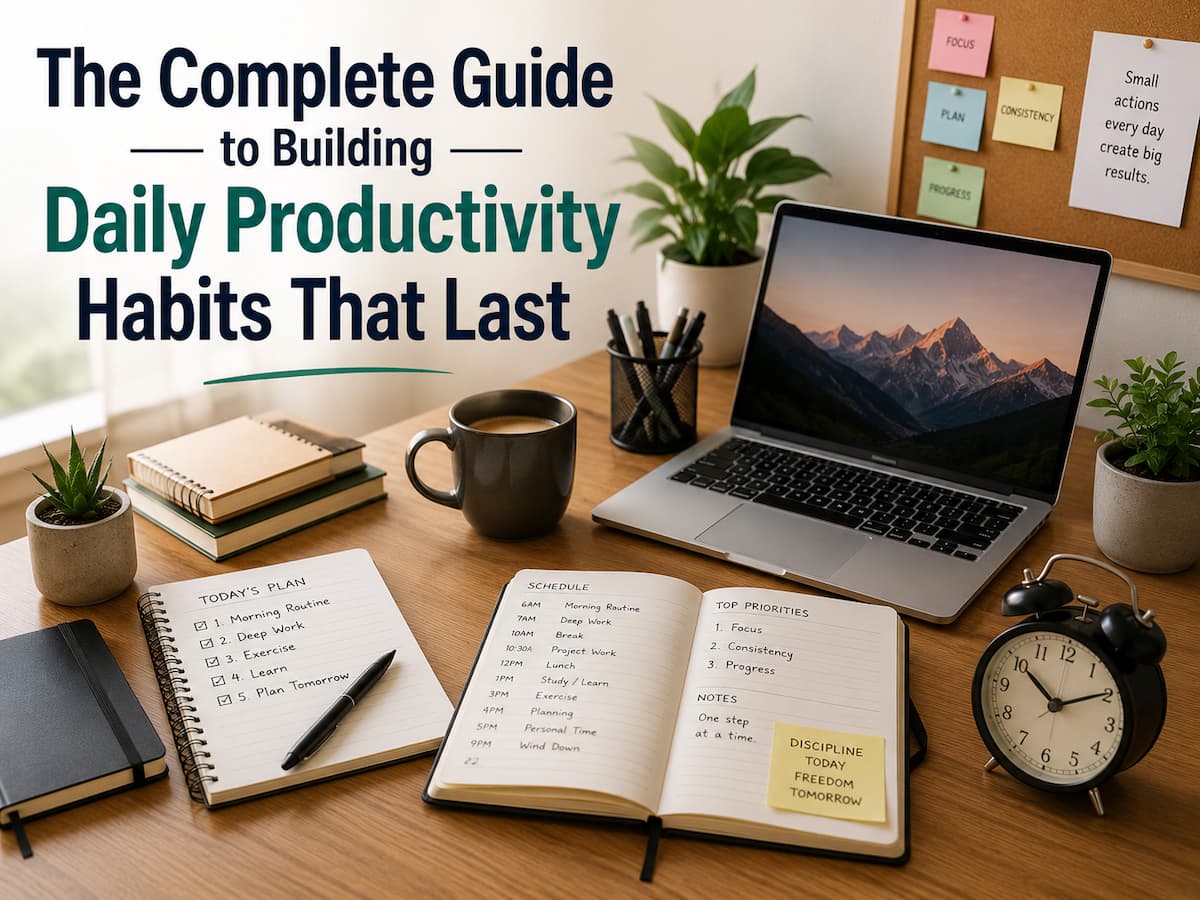
Many people want to become more productive, but the biggest challenge is not finding another productivity tip. The real challenge is building habits that continue working after the initial motivation disappears. A new routine may feel exciting for a few days, but without a realistic system, old patterns often return.
Understanding What Productivity Really Means
Productivity is often misunderstood as doing more things in less time. In reality, productivity is about achieving meaningful results with the resources you have. A productive person is not necessarily someone who works constantly. It is someone who understands priorities and focuses attention on important activities. For example, spending eight hours answering random messages, checking notifications, and switching between tasks may feel busy, but it may produce very little progress. On the other hand, spending two focused hours completing an important project can be highly productive.
Busy Work vs Productive Work
| Busy Work | Productive Work |
|---|---|
| Constantly checking emails | Responding at planned times |
| Doing easy tasks first | Completing important tasks first |
| Multitasking frequently | Focusing on one task at a time |
The first step toward better productivity is changing your definition of success. The goal is not maximum activity. The goal is meaningful progress.
Creating a Strong Productivity Foundation
Strong productivity habits begin with a simple foundation. Many people fail because they try to completely redesign their lives overnight. They create complicated schedules, download many apps, and set unrealistic expectations. A better approach is to start with small changes. A simple morning routine, a daily planning habit, or a consistent workspace setup can create a foundation for improvement.
Important Productivity Foundations
- A clear understanding of your priorities
- A realistic daily schedule
- A comfortable working environment
- A system for organizing tasks
- Regular time for rest and recovery
A simple productivity system that you use every day is more valuable than a complicated system that you abandon after one week.
Setting Clear Daily Goals
Daily goals provide direction. Without clear goals, it is easy to spend the day reacting to whatever appears first. A good goal tells you what needs attention and helps you measure progress. Many people create long task lists that become overwhelming. A better method is selecting a few important tasks that would make the day successful if completed.
| Goal Type | Example |
|---|---|
| Unclear goal | Work on the project. |
| Clear goal | Complete the first section of the project before lunch |
Specific goals reduce decision fatigue because you already know what action to take. They also create a sense of progress that helps maintain motivation.
Building a Daily Routine That Works
A routine reduces the number of decisions you need to make every day. When important actions become automatic, you spend less mental energy deciding what to do next. A productive routine does not need to look identical for everyone. Some people work best early in the morning, while others have higher focus later in the day. The important factor is creating a pattern that matches your natural working style.
Example of a Simple Productivity Routine
| Time Period | Activity |
|---|---|
| Morning | Review priorities and complete important work |
| Midday | Handle communication and smaller tasks |
| Evening | Review progress and prepare for tomorrow |
Avoid creating a schedule that leaves no room for unexpected events. Flexible routines are easier to maintain because they adapt to real life.
Learning How to Prioritize Tasks
Not every task deserves equal attention. One of the most important productivity skills is identifying which activities create the greatest impact. Many people spend their best energy completing simple tasks while delaying important work. This creates a cycle where major responsibilities become stressful because they receive attention too late.
Simple Priority Method
| Priority | Description |
|---|---|
| High importance | Tasks that create major results or have deadlines |
| Medium importance | Useful tasks that support progress |
| Low importance | Tasks that can wait or be reduced |
Start your day by identifying the most valuable task. Completing meaningful work early often creates momentum for the rest of the day.
Managing Distractions and Digital Overload
Digital distractions are one of the biggest challenges to modern productivity. Notifications, social media, messages, and constant updates can interrupt focus and make tasks take much longer. The solution is not removing technology completely. Technology can improve productivity when used intentionally. The key is controlling when and how you use digital tools.
Ways to Reduce Distractions
- Turn off unnecessary notifications.
- Create specific times for checking messages.
- Keep your workspace organized.
- Avoid opening unrelated websites during focused work.
Constant task switching can make simple work feel more difficult because your brain needs time to adjust between activities.
Managing Energy Instead of Only Managing Time
Time management is important, but energy management is equally valuable. Two people may have the same number of hours available but produce different results because their focus and energy levels are different. Sleep quality, breaks, movement, nutrition, and stress levels all influence your ability to concentrate. Ignoring these factors can make productivity systems harder to maintain.
Tracking Progress and Improving Habits
Tracking helps you understand what works and what needs improvement. You do not need complicated measurements. A simple weekly review can reveal useful patterns.
| Question | Purpose |
|---|---|
| What worked well? | Identify successful habits |
| What caused problems? | Find areas for improvement |
| What should change? | Create better strategies |
Common Productivity Mistakes
Many productivity problems come from unrealistic expectations. Trying to completely change your routine overnight often creates frustration.
- Creating schedules that are impossible to follow
- Using too many productivity tools
- Ignoring rest and recovery
- Confusing activity with progress
- Comparing your routine with others
Creating Habits That Last Long-Term
Long-lasting productivity comes from consistency rather than perfection. Missing one day does not destroy a habit. The important thing is returning to your routine and continuing. Start small, improve gradually, and focus on systems rather than motivation. Motivation changes, but well-designed habits can continue even during difficult periods.
Long-Term Productivity Principles
- Make habits simple enough to repeat.
- Improve one area at a time.
- Review your system regularly.
- Adjust your methods when your situation changes.
Conclusion
Building daily productivity habits is a gradual process. The goal is not creating a perfect schedule but developing routines that help you focus on important work while maintaining balance. By setting clear goals, reducing distractions, managing your energy, and reviewing your progress, you can create a productivity system that lasts. Small improvements repeated consistently can create meaningful results over time.
FAQs
1. How long does it take to develop a highly effective habit?
The time required depends on the habit itself and individual circumstances. Simple habits can be formed within a few weeks, whereas more complex ones take longer. The most important factor is consistency. Repeatedly performing a small action is often more effective than making major, temporary changes.
2. Why do highly effective systems fail?
Many systems fail because they are too complex or impractical. Effective methods need to align with your lifestyle and responsibilities. People tend to abandon systems that require too much effort to maintain. Simple systems are generally easier to stick with.
3. Should I schedule every minute of my day?
Filling every minute with activities creates unnecessary stress. A better approach is to schedule important tasks while allowing some flexibility for unexpected situations. A realistic plan should guide your day and ensure that routine changes do not feel like failures.
4. What is the best method for high efficiency?
There is no single method that works for everyone. Some people prefer time-blocking, while others favor to-do lists or goal-oriented planning. The best system is one that you can use consistently and that enables you to accomplish meaningful work.

ZapKido Editorial Team creates practical guides covering digital life, productivity, everyday technology, smart home solutions, and home organization. Our content focuses on clear explanations, useful settings, practical habits, and straightforward solutions that readers can apply in everyday situations. We aim to make technology and everyday tasks easier to understand without unnecessary complexity.