
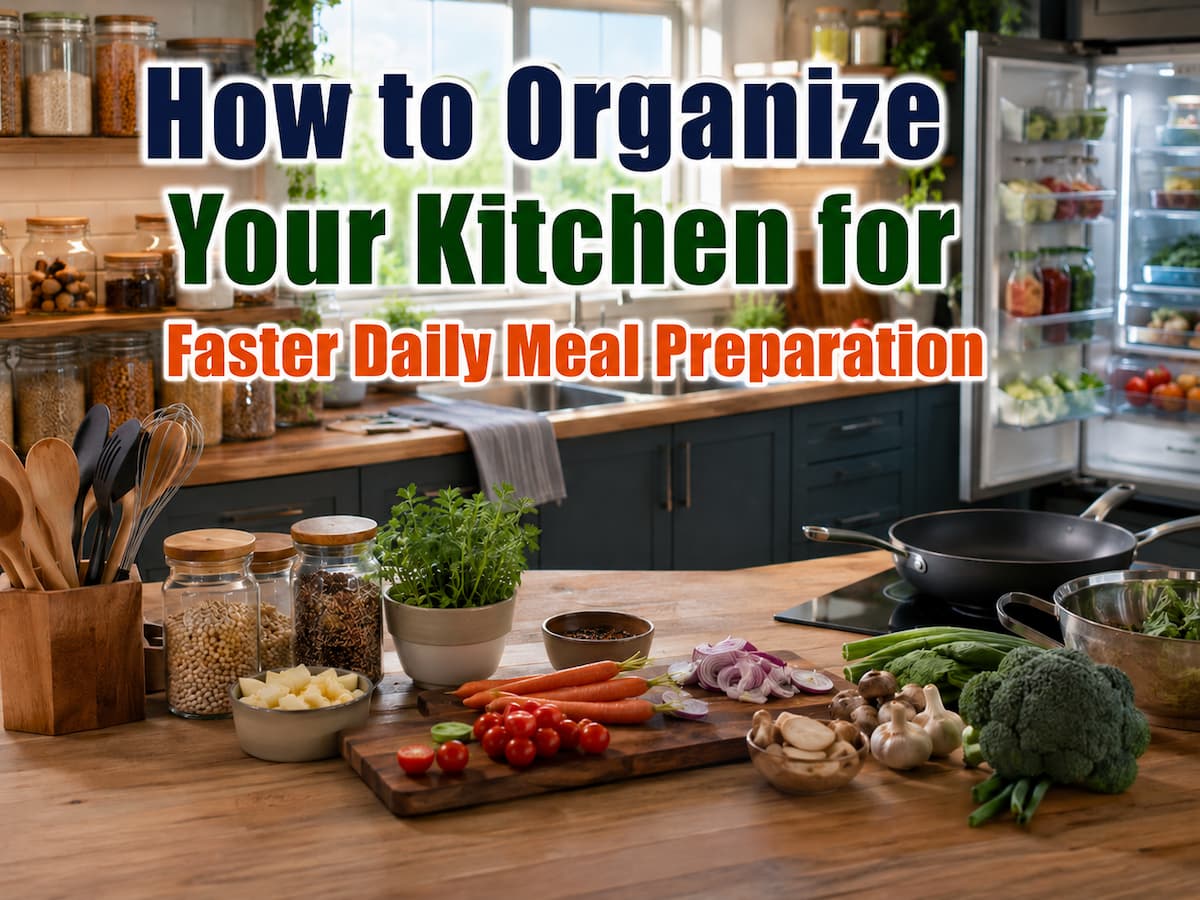
A good kitchen layout should align with your natural cooking style. Your most frequently used utensils should be within easy reach. Ingredients should be stored in the right places. Avoid cluttering the prep area with rarely used items. Good kitchen organization doesn’t mean every shelf has to be perfect or that you’re trying to replicate a designer kitchen from a magazine. It’s about creating a practical, efficient workspace and eliminating unnecessary steps. When you tailor your kitchen to your daily routine, cooking becomes effortless and stress-free. Often, this is where the biggest improvement lies. Instead of buying new storage solutions, try reorganizing what you already have. A few simple adjustments can make your daily cooking routine much more enjoyable.
Think About Your Kitchen as a Working Space
The kitchen is more than just a place to store things; it is a workspace where various activities take place repeatedly: meal planning, washing and prepping ingredients, cooking, serving, and cleaning up. If the kitchen layout doesn’t account for these activities, it leads to unnecessary movement. Professional kitchens are designed around workflows because reducing unnecessary steps boosts efficiency. Home kitchens don’t need to be as rigidly structured as restaurant kitchens, but the same principles apply. Place items where you use them, not just where they fit.
For instance, it makes more sense to keep a cutting board near your knives and kitchen tools than to store it in multiple locations. Keeping cooking utensils near the stove saves time while cooking. Storing frequently used ingredients in a prominent spot gives you a better overview of your inventory. Many kitchens are organized inefficiently because storage decisions are based purely on aesthetics. If you have to rummage through cupboards to find everyday items, a tidy, clean-looking cabinet might not actually be practical. Practicality comes first. The primary goal of organization is to make cooking easy and convenient; making the process enjoyable is a secondary benefit. Before renovating your kitchen, take a few days to observe how you use the space. Your daily habits are a more valuable source of information than any general organizational advice.
A Beginner’s Guide to Kitchen Organization
Before buying storage products, replacing cabinets, or moving containers, first identify what is currently slowing you down. Many people organize their kitchens based on how they *intend* to cook rather than how they actually use the space. Start by observing your daily cooking routine. Pay attention to which drawers you open repeatedly, which shelves get cluttered, and which items you need often. These are usually the areas most in need of improvement.
Focus on common organizational issues. A cluttered countertop can mean that too many infrequently used appliances are taking up valuable workspace. A messy pantry might indicate that similar ingredients are being stored in different locations. Drawers that require rummaging through every time could benefit from better organization. It is also helpful to categorize kitchen items into three groups: frequently used, occasionally used, and rarely used. Frequently used items are best kept in easily accessible spots. Occasionally used items can be stored a bit further away. Rarely used items may require a different storage solution. This approach prevents a common mistake: wasting time organizing items that aren’t actually causing a problem. Our goal isn’t to move everything around but to improve the areas that impact your daily kitchen routine.
Create Functional Zones that Suit your Cooking Habits
One of the most effective ways to improve kitchen efficiency is by creating simple zones. Zones are areas where related tasks and items are grouped together. This reduces unnecessary movement, as everything needed for a specific activity is within reach.
| Kitchen Zone | Purpose | Examples |
| Preparation Zone | Cutting, mixing, and ingredient preparation | Cutting boards, knives, mixing bowls, measuring tools |
| Cooking Zone | Preparing food on the stove or oven | Pans, cooking utensils, oils, frequently used spices |
| Storage Zone | Keeping ingredients organized | Pantry items, containers, dry goods |
| Cleaning Zone | Washing and maintaining the kitchen | Dish supplies, cleaning products, towels |
Creating zones does not mean your kitchen must be completely redesigned. Even small changes can help. Moving commonly used cooking tools closer to the stove or keeping breakfast items together can reduce daily effort. The best zones are based on your habits. Someone who prepares fresh meals every evening may need a stronger preparation area, while someone who mainly makes quick breakfasts may organize around morning routines.
Arrange Everyday Items Where They Are Actually Needed
Spices are frequently more useful near the stove than in a cabinet. Keep pots and pans near the stove to reduce dinner prep movement. This does not mean all countertop items must be visible. Too much stuff outside can clutter and restrict preparation space. Balance accessibility and cleanliness in the workspace. When organizing each kitchen item, ask yourself, “How often do I use this, and where would it make my task easier?” This simple question establishes a kitchen that encourages cooking rather than just looking organized.
Reduce Small Decisions to Improve Meal Preparation
Making many little decisions makes cooking tiresome, not because every activity is hard. What to cook, ingredients, tools, what needs to be used soon, and where everything goes afterward may be needed before creating a meal. Meal preparation might become challenging when these options occur frequently. A tidy kitchen eliminates busy-time decisions. You may focus more on cooking when everyday products are in predictable places.
Creating simple preparatory routines is useful. Keeping frequent ingredients together simplifies weekday cooking. If you make similar meals often, keeping tools and materials close can save time. Another tip is to prepare little tasks in advance. Washing common vegetables, displaying basic ingredients, and preparing leftover containers can simplify future meals. Avoidable impediments should be removed, not hours of food preparation. Not everything happens quickly in a kitchen that facilitates rapid food preparation. Because fewer decisions and distractions slow you down, it feels smoother.
Organize Your Pantry and Refrigerator for Easier Cooking
Organization is hardest in the fridge and pantry since they change so regularly. New foods arrive, ingredients are used at different rates, and stuff can easily get forgotten. Visibility is a good start. Visually appealing ingredients are more likely to be used before expiration. Hiding objects behind others makes it easy to buy duplicates or forget what you have.
Grouping comparable things simplifies buying and cooking. A predictable system can be created by grouping breakfast foods, baking supplies, and commonly used cooking ingredients. Pantry arrangement should fit your lifestyle. A daily cook may keep commonly used items at eye level, while an infrequent baker may store baking equipment separately.
Avoiding storage overpopulation is also helpful. An overstocked fridge or pantry may seem practical, but it makes it tougher to see what you have. Open space promotes visibility and simplifies arranging. Pantry and refrigerator management is not about beautiful displays. It makes ingredients easier to discover, use, and eliminate waste.
Make Cooking Tools Accessible
Kitchen tools can speed up or slow down cooking. Utensils, gadgets, and equipment that are infrequently used and hard to reach are in many houses’ drawers. A quick check of your culinary gear can indicate storage priorities. Weekly tools should be accessible, but infrequent goods can be stored elsewhere.
Drawer organizers, buckets, or simple dividers can keep frequently used tools separate. Storage products should solve problems, not complicate them. Buying organizers before discovering your needs typically creates clutter. It can also group related tools. Mixing bowls, measuring cups, and baking equipment function best together. Store stove-area cooking equipment near the stove rather than around the kitchen. Knowing whatever tool keeps getting in your way is helpful. The issue may be storage, not the object.
Schedule a Simple Kitchen Reset
Cooking for several days can muck up even the cleanest kitchen. Ingredients move, dishes pile up, and tools may not return. A quick reset prevents tiny issues from becoming big cleanups. A quick kitchen reset is possible. Rearranging objects, removing preparation surfaces, checking leftovers, and wiping commonly used locations helps prepare the space for the following meal.
Resetting the kitchen after dinner helps many individuals. This sets a fresh start the next morning. Best routine: one that fits your schedule. Weekly maintenance helps too. Reviewing the cupboard, refrigerator, and basic ingredients helps avoid last-minute buying issues. The goal of a reset routine is not a pristine kitchen. It prevents minor disturbance from becoming frustrating.
Common Kitchen Organization Mistakes That Slow You Down
Kitchen organization issues often stem from good intentions. People try to improve their area but use ways not suitable for their lifestyle. Understanding these faults can help build a sustainable system. The mistake of organizing for looks is prevalent. A tidy kitchen may be inconvenient to use. Beautiful containers and well-arranged shelves are useless if regularly used goods are hard to reach.
Another issue is storing too many rarely used goods in prime locations. Large appliances, duplicate utensils, and specialty tools take up room that could be used for daily items. Also common is buying storage devices too rapidly. Containers, racks, and organizers can help, but they should support a sensible structure. More storage without the removal of superfluous objects might cause clutter. Sometimes people modify their organization too often. Items moving often cause confusion. Give your practical arrangement time to work before making substantial modifications.
Final Thoughts
A more efficient kitchen doesn’t require expensive equipment, a major renovation, or immaculate organization. Understanding your habit and organizing your area around cooking usually yields the greatest gains. Find out what slows you down. Create basic solutions: organize relevant objects, put out commonly used tools, improve ingredient visibility, and maintain the system with modest habits.
Kitchens should support life. It should simplify meal prep, not increase effort. When everything is in its place, cooking is more about comfort than searching. A picture-perfect kitchen is not the goal. A kitchen that works for you and simplifies meal prep is the goal.
FAQs
1. How do I handle a messy kitchen?
Begin cleaning the areas you use the most, such as the cooking area, main drawers, refrigerator, or pantry. Enhancing the elements that touch your everyday life will make the biggest change in the shortest period of time.
2. Must I buy kitchen organizers to get a better system?
No. There are many improvements that can be achieved simply by rearranging existing things. Storage products can help with specific challenges, but first you need to know what you actually need in terms of organization.
3. How do I cook faster without prepping meals?
You can cut your prep time without meal preparations by being more efficient at your workflow. Making utensils easy to find, ingredients organized, and movement minimized can make the daily grind of cooking a lot easier.
4. How often do I need to scrub my kitchen?
No thorough rearrangement is generally needed. You can make little tweaks anytime your cooking habits change. Regular assessments ensure the system’s practicality.
5. Is it better to leave your regularly used appliances on the counter?
It is contingent upon your routine and the area you have available. Some appliances may be worth the counter space if they are used almost every day, while others may be better off kept away to keep preparation areas uncluttered.
References
- United States Department of Agriculture (USDA) – Food storage and food safety guidance:
https://www.usda.gov/ - FoodSafety.gov – Safe food handling and storage information:
https://www.foodsafety.gov/ - University Cooperative Extension Programs – Home organization and food management resources:
https://extension.umn.edu/

ZapKido Editorial Team creates practical guides covering digital life, productivity, everyday technology, smart home solutions, and home organization. Our content focuses on clear explanations, useful settings, practical habits, and straightforward solutions that readers can apply in everyday situations. We aim to make technology and everyday tasks easier to understand without unnecessary complexity.