
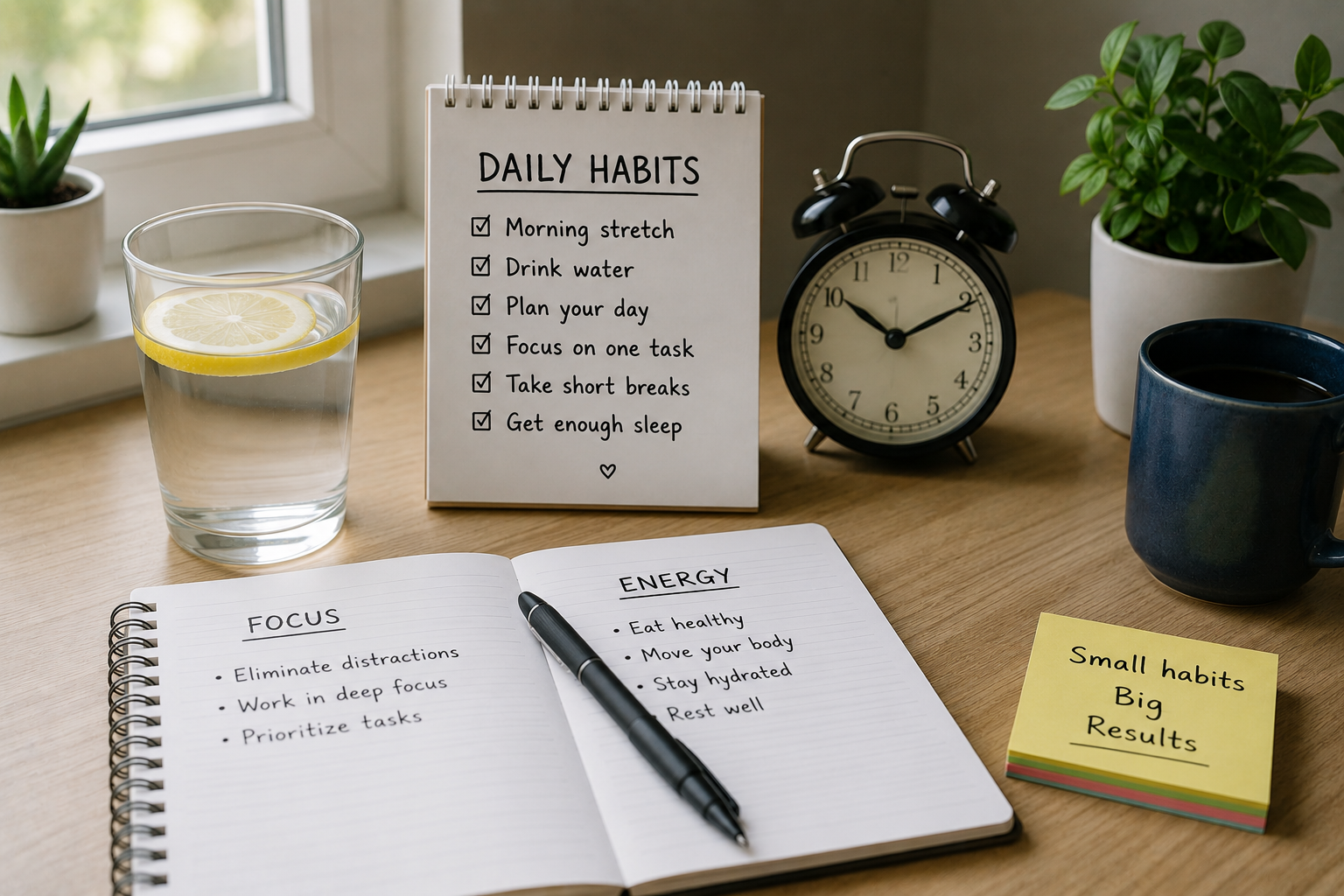
Small habits are powerful because they do not require extreme effort. They are easy to maintain and become part of your routine without overwhelming your schedule. Over time, these habits improve mental clarity, strengthen focus, and help you feel more energised throughout the day. This article will introduce you to practical, realistic, and beginner-friendly habits that can naturally enhance your focus and energy.
Starting Your Day with a Calm and Intentional Morning
The way you start your morning has a strong influence on how the rest of your day unfolds. A rushed or chaotic morning often leads to scattered focus and low energy, while a calm and intentional start helps set a steady tone for the day. Instead of immediately jumping into your phone or daily stress, taking a few moments to begin your day slowly can make a big difference. This gives your mind time to wake up and prepare for the tasks ahead.
A peaceful morning routine helps reduce mental noise and creates clarity. When you don’t overload your mind in the first few minutes of the day, you find it easier to stay focused later on. Over time, this simple habit trains your brain to start the day with more control and awareness, improving both energy levels and concentration naturally.
Drinking Water Early to Refresh Your Mind and Body
One of the simplest habits that can improve focus and energy is staying properly hydrated. After several hours of sleep, the body naturally needs water to feel refreshed again. Drinking water early in the day helps wake up your system and supports mental clarity. Many people underestimate how even mild dehydration can affect their focus, mood, and energy levels.
When you make it a habit to drink water regularly throughout the day, you may notice that your mind feels more active and your body feels less tired. This small action supports your overall productivity without requiring any effort or planning. It is a simple habit, but its impact builds steadily when practiced consistently.
Planning Your Day to Reduce Mental Clutter
A lack of clarity about what you need to do can drain your energy even before you start working. When your mind is constantly thinking about tasks, responsibilities, and unfinished work, it becomes harder to stay focused. Planning your day helps reduce this mental clutter. When you write your tasks clearly or organise them mentally, your brain does not need to keep remembering everything at once. This frees up mental space for better concentration.
A simple daily plan gives direction to your actions. Instead of deciding what to do every few minutes, you already know your priorities. This reduces stress and helps you stay more productive throughout the day. Over time, this habit builds a sense of control and structure that naturally improves focus and energy levels.
Taking Short Breaks to Refresh Your Focus
Many people believe that working continuously for long hours leads to better productivity, but in reality, the mind works better with short breaks. Without rest, focus slowly declines, and energy levels drop. Short breaks help your brain reset. Even a few moments away from your task can refresh your thinking and improve concentration when you return. These pauses prevent mental fatigue and help maintain steady energy throughout the day.
When breaks are part of your routine, they do not feel like distractions. Instead, they become a natural rhythm that supports better performance and clearer thinking. This simple habit helps you avoid burnout and maintain consistent productivity.
Reducing Digital Distractions for Better Mental Clarity
In today’s digital environment, constant notifications and online content are major sources of distraction. Every time you shift your attention to a phone or screen, you interrupt your focus. Reducing digital distractions is one of the most effective ways to improve mental clarity. This does not mean completely avoiding technology but using it more intentionally.
When you limit unnecessary interruptions, your brain can stay focused on one task for longer periods. This improves both the quality of your work and your ability to stay engaged. Over time, your mind becomes less reactive to distractions, allowing you to stay more present in your daily activities.
Focusing on One Task at a Time Instead of Multitasking
Multitasking may feel productive, but it often reduces efficiency and increases mental fatigue. When you switch between tasks repeatedly, your brain loses focus and takes longer to adjust each time. Focusing on one task at a time allows your mind to fully engage with what you are doing. This leads to better understanding, faster completion, and higher-quality results.
When you develop the habit of single-tasking, your attention becomes stronger and more stable. You start finishing tasks with less stress and more clarity. This simple shift in approach can significantly improve both your focus and energy levels throughout the day.
Keeping Your Environment Clean and Organized
Your surroundings have a strong impact on your mental state. A cluttered or disorganised space can create a sense of distraction, while a clean, simple environment supports better focus. When your workspace is organised, your mind feels less overwhelmed. You can find what you need more easily and stay focused on your tasks without unnecessary interruptions.
A calm environment also reduces mental stress and helps you feel more relaxed while working or studying. This improves both productivity and energy levels. Over time, maintaining a tidy space becomes a habit that naturally supports a more focused lifestyle.
Moving Your Body to Stay Energized Throughout the Day
Physical movement plays an important role in maintaining energy levels. When you stay in one position for too long, your body can feel fatigued, and your focus may decrease. Simple movement throughout the day helps refresh your body and mind. It improves alertness and helps you feel more active and engaged in your tasks.
Even light activity during breaks can make a noticeable difference in how energetic and focused you feel. It prevents stiffness and keeps your mind feeling fresh. This habit is especially helpful for people who spend long hours working or studying in one place.
Improving Sleep Consistency for Better Daily Performance
Good sleep plays a major role in how focused and energetic you feel during the day. When your sleep schedule is irregular, your body and mind may feel fatigued, even if you are not physically active. Maintaining a consistent sleep routine helps your body develop a natural rhythm. This supports better alertness during the day and more stable energy levels.
When you are well-rested, it becomes easier to concentrate, make decisions, and stay motivated. Your mind feels clearer, and tasks become easier to manage. Over time, a consistent sleep pattern becomes one of the strongest foundations for improved focus and energy.
Practicing Mindful Awareness in Daily Activities
Mindfulness is simply the habit of being present in what you are doing. Many people go through their day while thinking about the past or worrying about the future, which reduces focus and energy. When you practice mindful awareness, even simple tasks feel more meaningful and easier to complete. Your attention becomes more stable, and distractions lose their power.
This does not require special techniques. It is about paying attention to the present moment during everyday activities like working, eating, or planning your day. Over time, this habit strengthens your ability to stay focused without feeling mentally overwhelmed.
Building Consistency with Small, Realistic Changes
The key to improving focus and energy is not doing everything at once but building small habits consistently. Trying to change too many things quickly often leads to frustration and loss of motivation. Small changes are easier to maintain and gradually become part of your lifestyle. When you repeat these habits daily, they create long-term improvements in your focus and energy levels.
Consistency is more important than intensity. Even simple habits, when practiced regularly, can lead to meaningful results over time. This approach makes personal improvement feel natural and sustainable instead of stressful or overwhelming.
Conclusion:
Improving focus and energy does not require dramatic lifestyle changes. It is built through small, simple habits that gradually reshape how you think, work, and manage your daily life.
By starting your day calmly, staying hydrated, planning your tasks, reducing distractions, and focusing on one activity at a time, you create a strong foundation for better productivity. Adding habits like regular breaks, movement, mindfulness, and consistent sleep further strengthens your mental clarity and energy levels.
The most important lesson is that small actions, when done consistently, lead to powerful long-term results. Instead of trying to change everything at once, focus on building one habit at a time. Over time, these small improvements will transform the way you feel, think, and perform each day.
FAQs
1. What are the easiest habits to improve focus quickly?
Simple habits like drinking water, reducing distractions, and taking short breaks can improve focus quickly without requiring major lifestyle changes.
2. How long does it take for daily habits to show results?
It varies for each person, but many people start noticing improvements in focus and energy within a few weeks of consistent practice.
3. Can small habits really increase energy levels?
Yes, small habits like better sleep consistency, regular movement, and planning your day can significantly improve daily energy levels over time.
4. What is the most important habit for better focus?
Single-tasking is one of the most effective habits because it helps train your mind to concentrate on one activity at a time.
5. Do I need to follow all habits at once?
No, it is better to start with a few simple habits and build gradually. Consistency matters more than doing everything at once.

Abdul Rahman is a digital lifestyle writer and researcher who focuses on productivity, smart technology, personal finance, and practical home improvement tips. Through ZapKido, he shares simple, beginner-friendly guides designed to help readers build smarter habits, improve daily efficiency, and live a more organized digital life.