
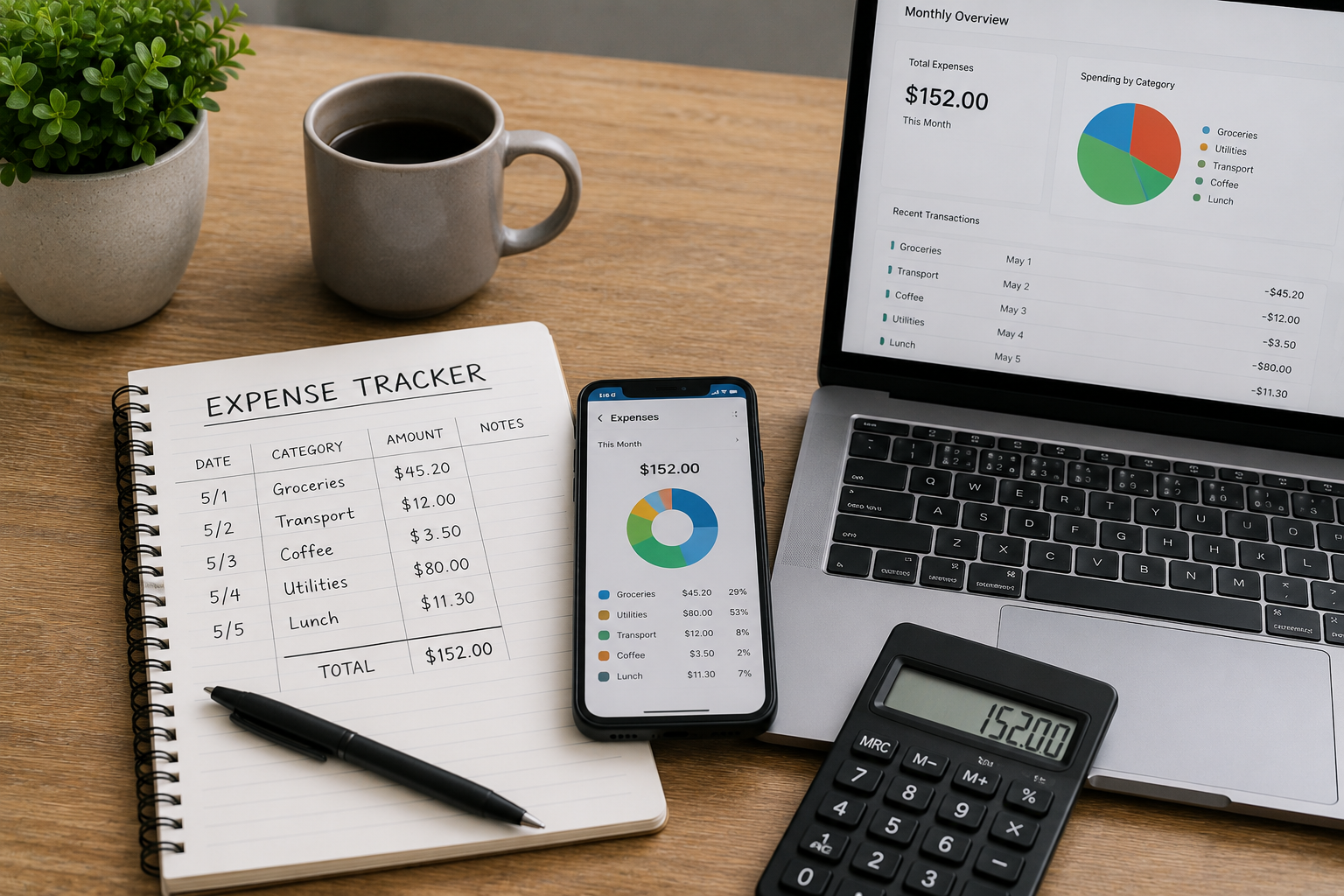
They all failed. Not because I am lazy. Okay, partly because I am lazy. But mostly because they required too much effort, too much guilt, or too much thinking about money when I would rather be thinking about literally anything else.
The system I use now? I have been doing it for 14 months. It takes about 10 seconds after each purchase and 5 minutes on Sunday evening. That is it. No categories. No budgets. No shame. Just a notebook, a pen, and the radical act of paying attention. Here is the embarrassingly simple thing that finally stuck.
Everything I Tried That Did Not Work (So You Know I Am Serious)
Before I tell you what works, let me save you some time by telling you what does not. At least, not for people like me.
| Method | Why I Tried It | Why It Died |
|---|---|---|
| Mint / YNAB / Every App Ever | Automatic categorization seemed magical | Constant notifications, wrong categories, guilt-inducing “you’ve exceeded your fun budget” alerts. Deleted within 3 weeks. |
| Spreadsheet with Categories | Total control, beautiful colors | Spent more time categorizing a $3 coffee than drinking it. Abandoned after the second week when I fell behind. |
| Envelope System | Tactile, no technology | Carrying cash in 2025 is annoying. Also, I felt ridiculous at the grocery store counting bills from a paper envelope. |
| Receipt Photos | Seemed low-effort | The pile of unuploaded receipts became its own source of anxiety. I had receipts in my wallet, car, desk, and jacket pockets. |
| Paper Notebook | Desperation | Stuck for 14 months and counting. No batteries, no notifications, no categories. Just writing. |
The pattern? Every digital solution added complexity. Every complex solution added guilt. The notebook added nothing except awareness. And somehow, that was enough.
The System: Three Rules, No Exceptions
I use a $2.50 spiral notebook from the drugstore. It is ugly. It has coffee stains. The first page has a grocery list from March 2024 that includes “milk, eggs, ham.” But it lives in my bag, always. That is the only requirement: it must be with you, or the system dies.
Some people use their phone notes. I tried that. The problem is my phone is also where I spend money, get distracted, and forget why I opened it. The physical notebook creates a ritual. Open bag, pull notebook, write. Ten seconds. Done.
That is it. Not “Starbucks Coffee, $4.50, Food & Beverage, Dining Out subcategory.” Just:
Notice “Random Amazon thing.” I do not pretend it was a need. I do not categorize it. I just named it honestly. The honesty is the point. If I wrote “household supplies,” I would be lying to myself. ” Random Amazon thing” reminds me that I bought something at 11 PM while half-asleep.
Every Sunday at about 7:30 PM, I spend 5 minutes doing three things:
- Add the week’s numbers. I use my phone calculator. Total: usually $180–$240.
- Notice one thing. “I went to the coffee shop four times this week.” Not “I am bad with money.” Just “I went four times. “Neutral observation.
- Decide one tiny adjustment for next week. “Maybe make coffee at home Tuesday and Thursday. “Not ‘never go to coffee shops again.'” Just two days.
The whole thing takes five minutes. Sometimes I do it during a TV commercial break. The key is that it is not a “budget review.” It is a “what happened this week” review. No goals. No punishment. Just looking.
Why This Works (The Psychology, Briefly)
I am not a psychologist. But I have read enough to know that two things kill expense tracking: friction and shame. Every other system I tried had both in abundance.
Friction is the effort required. Open the app, navigate to transaction, select category, and confirm. Or worse: open the spreadsheet, find the right cell, enter data, update the formula, and save the file. My notebook system has almost zero friction. The notebook is already open because I just used it. The pen is already out. I write and close it.
Shame is the emotional cost. Apps that tell you “you’ve exceeded your dining budget” make you feel like a child being scolded. Spreadsheets that show you spent 34% on “wants” when you aimed for 20% make you feel like a failure. My system has no targets, so there is nothing to fail. I just look at the numbers. Sometimes I spend more. Sometimes less. Neither is good or bad. It just is.
What I Learned After 14 Months of Doing This
I spend money in predictable waves
Week one of every month: I feel rich. I just got paid. I buy things. Week three: I feel poor. I stop buying things. Week four: I panic-buy groceries because I think I have no food, then realize I have three unused bags of rice. Seeing this pattern in my notebook made it undeniable. I now do a bigger grocery shop in week one and force myself to eat what I have in week four.
“Small” purchases are not small
I used to think $3 here and $5 there did not matter. My notebook proved otherwise. In month three, I added up all my “small” purchases under $10. Total: $340. That was more than my grocery bill. I did not cut them all out. I just started noticing them. And noticing them made about half of them disappear.
I have emotional spending triggers
Bad day at work? The notebook shows a convenience store visit. Bored on Saturday? The notebook shows an online purchase. Stressed about money? Ironically, the notebook shows more spending. I cannot always stop the trigger. But now I see it coming. Sometimes I take a walk instead. Sometimes I still buy the thing. But I know I am doing it.
I forget what I bought almost immediately
This was the weirdest discovery. I would buy something on Monday and genuinely not remember it by Friday. Without the notebook, I had no idea where my money went. With the notebook, I have a record of my own amnesia. It is oddly comforting to know I am not secretly hemorrhaging money—I am just forgetful.
The Mistakes I Still Make (Because I Am Human)
How to Start This Weekend (Seriously, This Weekend)
You do not need to prepare. You do not need to research. You need a notebook and a pen. That is it. Here is your entire startup process:
- Friday: Buy a notebook. Any notebook. While you are out, write down whatever you buy. Do not change your spending. Just write it.
- Saturday: Keep the notebook with you. Write down everything. Do not judge it. “Groceries, $54.” “Random thing, $12.” “Coffee, $4.50.”
- Sunday: Add it up. Use your phone calculator. Look at the total. That is it. No action required. Just look.
- Next Sunday: Do it again. Notice one pattern. “I spent $40 on coffee this week.” No decision needed. Just notice.
- The Sunday after: Make one tiny adjustment. “I will make coffee at home Monday and Wednesday. “That is it. One adjustment.
- Consumer Financial Protection Bureau. (2025). Financial Empowerment Toolkit. Retrieved from consumerfinance.gov
- Behavioral Economics Research. (2024). The Role of Awareness in Spending Reduction. Journal of Consumer Psychology.
- James Clear. (2018). Atomic Habits: An Easy & Proven Way to Build Good Habits & Break Bad Ones. Avery. (Friction reduction and habit formation principles)
- University of Chicago Booth School of Business. (2023). Tracking and Financial Behavior Change. Working Paper Series.
- NerdWallet. (2026). How to Track Expenses: A Step-by-Step Guide. Retrieved from nerdwallet.com

Abdul Rahman is a digital lifestyle writer and researcher who focuses on productivity, smart technology, personal finance, and practical home improvement tips. Through ZapKido, he shares simple, beginner-friendly guides designed to help readers build smarter habits, improve daily efficiency, and live a more organized digital life.