
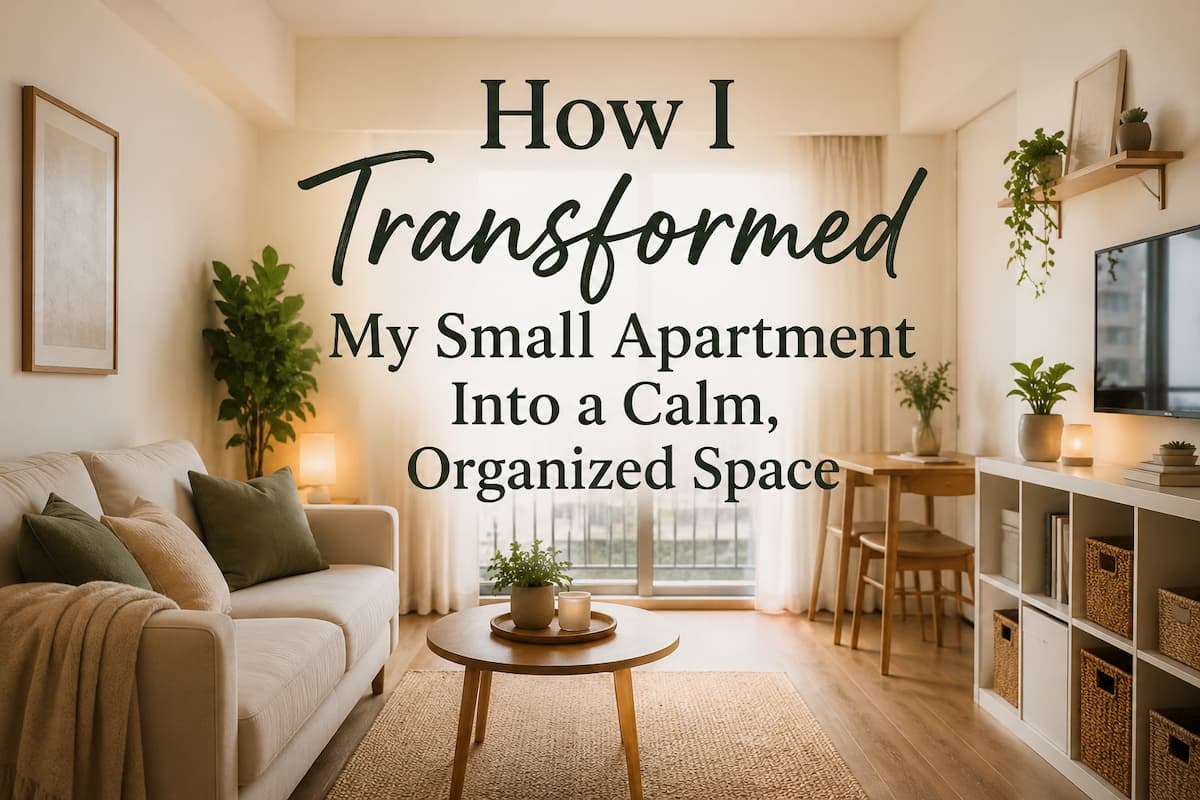
Three years ago, I walked into my 480-square-foot studio apartment and felt an immediate wave of dread. The front door opened directly into a kitchen that doubled as a hallway. My bed was wedged between a bookshelf and a window I couldn’t fully open. Every surface held something — mail, dishes, half-finished projects, clothes I kept meaning to donate. I had lived there for eight months, and it still felt like I was camping in someone else’s storage unit.
What changed wasn’t a sudden influx of money or space. It was a Tuesday evening when I sat on my couch and realized I was spending more energy navigating clutter than actually living in my home. That night, I made a decision: I would stop treating my apartment like a temporary pit stop and start treating it like a place worth caring for.
Here is exactly what I did, what I wish I had done differently, and what finally worked.
The Honest Assessment: Facing What I Actually Owned
Before I bought a single storage bin, I spent one full weekend pulling every item out of every hiding spot and laying it on the floor. It was embarrassing. I owned four can openers. I had seventeen coffee mugs for a person who lived alone. I kept every shoebox “just in case.”
This wasn’t minimalism. It was honesty. I wrote three categories on paper: Keep, Donate, Trash. I forced myself to touch every object and ask: “Does this item earn its place here?” Not “Could this be useful someday?” Just: does it earn its place?
By Sunday night, I had filled four garbage bags for donation and two for the trash. The relief was physical. I slept better that night than I had in months.
Working With the Space, Not Against It
My biggest early mistake was trying to make my apartment look like the ones I saw online. I bought a sleek console table that was beautiful and completely wrong for the narrow walkway between my door and kitchen. I hung floating shelves that looked great in photos but couldn’t hold anything heavier than a paperback.
The shift came when I stopped imagining what my apartment should look like and started observing how I actually moved through it. I noticed I always dropped my keys on the kitchen counter because it was the first flat surface inside the door. So I added a small wall-mounted organizer right there. I repositioned my bed against the far wall and used a tall bookshelf as a visual divider.
Small apartments don’t need dramatic renovations. They need you to pay attention to your own behavior and design around it.
Storage That Actually Functions
Once I cleared the excess, I needed places for what remained. But every container had to solve a specific problem.
| Problem | What I Tried First | What Actually Worked |
|---|---|---|
| Shoes piled by the door | Over-the-door organizer | Stackable clear bins under the bed, labeled by season |
| Tangled cords everywhere | Basket to toss them in | Velcro ties + labeled zip pouches by device type |
| Pantry items falling out | Tall plastic bins | Uniform glass jars with chalk labels |
| Closet chaos | More hangers | Slim velvet hangers + hanging shelf |
| Bathroom counter clutter | Countertop organizer | Wall-mounted strip + drawer dividers |
The theme across every success was visibility. If I couldn’t see it, I forgot I had it. Clear containers, labels, and open storage changed everything.
The Daily Systems That Keep It Working
Organization without maintenance is just a photo opportunity. I built tiny systems that required almost no effort:
- The Two-Minute Rule: If a task takes less than two minutes — hanging up a coat, putting a dish away, filing mail — I do it immediately. No exceptions. These tiny actions prevent the snowball effect that used to bury me by Thursday.
- The Sunday Reset: Every Sunday evening, I spend twenty minutes walking through the apartment with a laundry basket. Anything that doesn’t belong in the room it’s in goes in the basket. Then I return each item to its proper home. Twenty minutes. That’s it.
- The One-In-One-Out Rule: If I bring something new into the apartment, something old leaves. New jacket? An old one gets donated. This prevents the slow creep of accumulation.
- The Landing Zone: I designated one small surface near the door as the only place for keys, wallet, and daily essentials. Everything else gets put away. This eliminated 80% of my daily “where is my…?” panic.
Creating Calm, Not Just Order
Organizing my stuff was only half the battle. The other half was making the space feel calm. A tidy room can still feel stressful if the lighting is harsh or the air feels stale.
I made three changes that had nothing to do with storage. First, I addressed the lighting. My apartment came with one overhead fixture that made every evening feel like a hospital waiting room. I added a floor lamp with a warm bulb and battery-powered puck lights inside my closet. Layered, warm lighting changed the entire mood after sunset.
Second, I brought in one living thing. I bought a single pothos plant for $12. That one plant made the apartment feel cared for. It was a signal to myself that this was a home, not a storage unit.
Third, I created one restful corner. I pushed a small chair by the window, added a soft throw blanket, and kept a book there. No phone charger. No work materials. Just a place to sit and breathe. Having one spot with no purpose beyond rest made the whole place feel more generous.
What I Learned the Hard Way
I once spent an entire Saturday organizing my closet by color, inspired by a photo. It looked incredible for four days. Then I did laundry and couldn’t maintain it, because color-coding doesn’t match how I actually choose clothes. I organize by type now — work tops, casual tops, bottoms — and it stays functional because it matches my behavior.
I also bought “organizational” items I didn’t need. A spice rack that didn’t fit my cabinet. A drawer organizer that was the wrong size. The lesson: measure twice, buy once. Sometimes a cardboard box works just as well as a $20 storage solution.
Most importantly, I learned that organization is not a destination. It is a practice. My apartment will never be “done.” But I now have the skills to bring it back to center whenever life gets messy.
Where to Start If You’re Feeling Overwhelmed
If you’re reading this while sitting in a space that stresses you out, I understand the paralysis. Here’s what I would tell myself three years ago:
Then pick one surface — your kitchen counter, your desk, your nightstand — and clear it entirely. Live with it empty for a day. Notice how it feels. Then add back only what truly belongs there.
Finally, identify your biggest daily frustration. Is it losing your keys? Piles of mail? A chaotic closet? Solve that one problem with one specific solution. Don’t try to fix everything at once.
Summary: The Core Principles That Made This Work
Key Takeaways
- Be honest about what you own. Most clutter is just delayed decisions. Make them.
- Design for your actual behavior, not an idealized version of yourself.
- Choose visible, functional storage over hidden chaos.
- Build tiny daily systems that require minimal willpower.
- Create at least one calm corner that serves no purpose beyond rest.
- Accept that organization is ongoing, not a one-time project.
My apartment is still 480 square feet. It is still a studio. I still fold out my couch into a bed every night. But when I walk through the door now, I feel something I never used to feel: relief. This small space is mine, it works for me, and I know how to keep it that way.
That Tuesday evening decision changed more than my apartment. It changed how I relate to my surroundings, my belongings, and my daily life. And if a chronically cluttered person like me can do it, I promise you can too.

Abdul Rahman is a digital lifestyle writer and researcher who focuses on productivity, smart technology, personal finance, and practical home improvement tips. Through ZapKido, he shares simple, beginner-friendly guides designed to help readers build smarter habits, improve daily efficiency, and live a more organized digital life.