
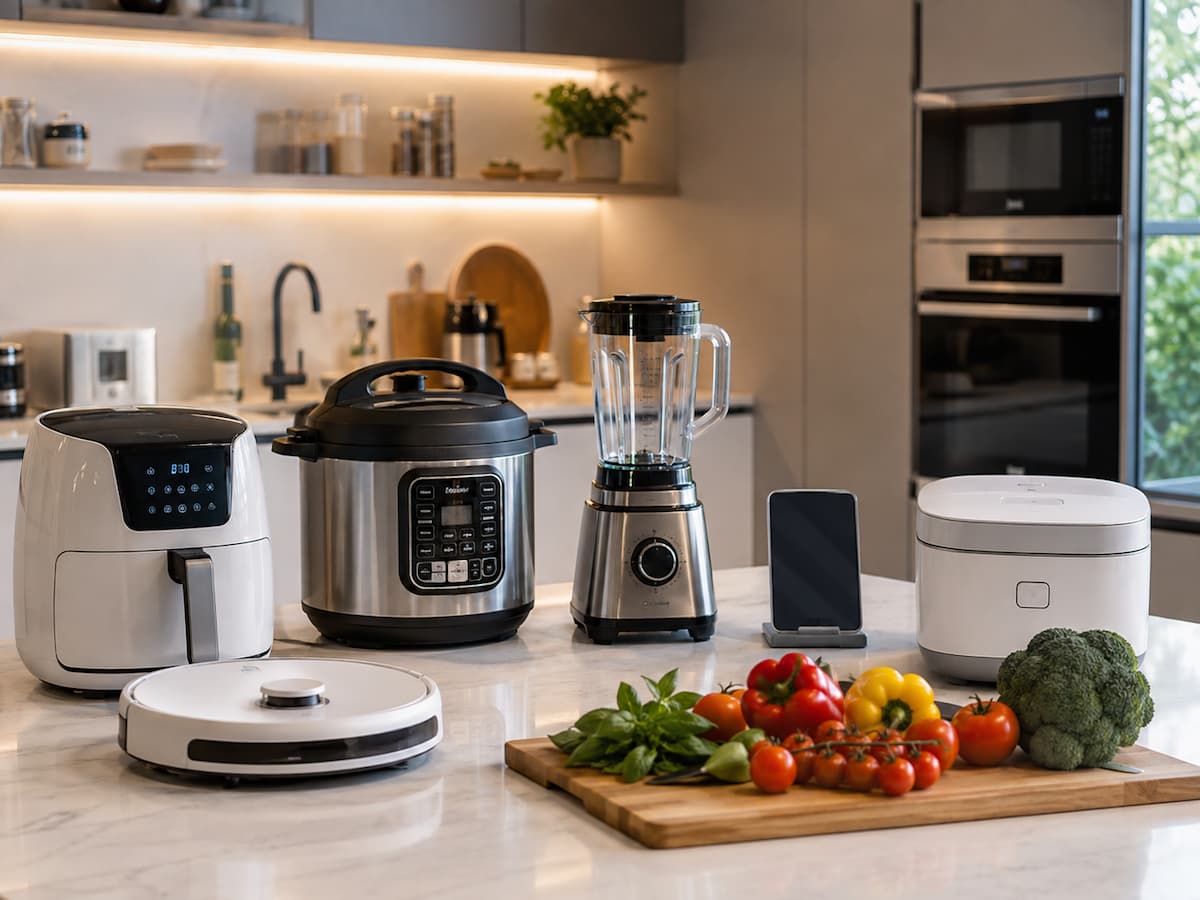
Modern kitchens are filling up with connected appliances, digital displays, automatic timers, and devices that promise to cook faster. Some of them genuinely can. Others add another app, another charging cable, or another complicated setup to a task that was already simple. The useful smart kitchen devices are usually the ones that remove small frustrations from everyday cooking. A good appliance might monitor cooking temperature while you prepare something else, alert you when food needs attention, or help you repeat a recipe successfully. It does not necessarily need dozens of features to be valuable.
The key is choosing technology that fits the way you already cook. Someone who prepares meals from scratch every evening may benefit from a connected multicooker, while another person may get more value from a smart food scale or a thermometer. The best kitchen technology is not the device with the longest feature list. It is the one that saves time or reduces effort without making the kitchen harder to manage.
Start With the Problems You Already Have
Before buying a smart kitchen device, it helps to look at the moments when cooking becomes inconvenient. Maybe you regularly forget something simmering on the stove, struggle to judge whether meat is properly cooked, or spend too much time measuring ingredients. Those problems point toward useful technology much better than a list of popular gadgets does.
This approach also prevents a common mistake: buying several devices that perform functions you rarely need. A kitchen can quickly become crowded with specialized appliances that seemed useful when purchased but eventually end up sitting in a cupboard. Smart technology makes the most sense when it solves a recurring problem. If a device can save several minutes every day, prevent overcooking, simplify preparation, or make a difficult task more predictable, its usefulness becomes much easier to justify.
A Smart Food Thermometer Can Remove the Guesswork
Cooking temperature is one area where a small electronic device can make a surprisingly large difference. A smart food thermometer can monitor the internal temperature of food instead of requiring you to cut into it repeatedly to see whether it is ready. This is particularly helpful with foods where appearance can be misleading. A roast may look browned on the outside while still needing more cooking in the center. Chicken, turkey, large cuts of meat, bread, candy, and other temperature-sensitive foods can all benefit from accurate measurement.
Some modern thermometers can send temperature information to a phone or alert you when they reach a target temperature. That means you can prepare side dishes or clean the kitchen without constantly standing beside the oven. The important feature is not necessarily smartphone connectivity. Accuracy, durability, probe quality, and ease of reading matter more. A complicated thermometer that takes several minutes to configure is not necessarily better than a straightforward model that gives you an accurate reading immediately.
Smart Scales Make Measuring Ingredients More Consistent
A kitchen scale is already a useful tool, but a connected scale can make it even more convenient for people who follow recipes closely. Instead of measuring ingredients one container at a time, you can often place a bowl on the scale, zero it, and add ingredients directly into the same container. This reduces dirty dishes and makes portioning more consistent. It can be particularly useful for baking because small differences in flour, sugar, or other ingredients can affect the final result.
Some smart scales connect with recipe applications and can guide users through measurements. That can be helpful for beginners who are learning how to follow recipes by weight rather than volume. There is another advantage that is easy to overlook: repeatability. If you discover a recipe that works particularly well, weighing the ingredients makes it much easier to reproduce the same result later.
Connected Multicookers Can Handle the Cooking While You Do Something Else
Multicookers have become popular because they combine several cooking functions into one appliance. Connected versions add another layer of convenience by allowing users to monitor settings, cooking progress, or programs through a digital interface. For busy households, this feature can be more useful than having a separate appliance for every cooking method. A single machine may be capable of pressure cooking, slow cooking, steaming, sautéing, or preparing rice, depending on the model.
The biggest advantage is often not the smart connectivity itself, but rather the ability to set up a meal and let the appliance manage much of the cooking process. It is the ability to set up a meal and let the appliance manage much of the cooking process. However, users should still understand what the appliance is doing. Smart controls do not eliminate the need to follow cooking instructions, use appropriate liquid levels, or handle hot food safely. Technology can make cooking more convenient, but it does not replace basic kitchen awareness.
A Smart Oven Can Help With More Than Setting a Timer
Traditional ovens are perfectly capable of cooking food, but smart ovens can provide additional control and information. Depending on the model, they may offer remote monitoring, cooking programs, temperature sensors, recipe guidance, or notifications. Such features can be useful when a recipe requires several stages. Instead of repeatedly checking the oven, a connected appliance may tell you when it has reached the required temperature or when a cooking stage is complete.
Some ovens also include sensors designed to help regulate cooking conditions. That can make certain recipes more repeatable, although results will still depend on the food, cookware, rack position, and other factors. Remote control deserves some caution. Being able to change an oven setting from a phone sounds convenient, but users should understand exactly what their appliance allows and how its safety features work. Smart control should add convenience rather than encourage careless operation.
Smart Air Fryers Can Simplify Repeat Meals
Air fryers are already designed around convenience, and connected versions can make frequently prepared meals easier to repeat. A digital model may allow users to select cooking programs, save settings, monitor progress, or receive notifications. This can be particularly handy for foods that appear regularly on the weekly menu. Once you know the appropriate temperature and cooking time for a particular food, saving that information can make future preparation almost automatic.
Still, an air fryer does not need an internet connection to be useful. Good airflow, appropriate capacity, simple controls, and straightforward cleaning are often more important than smart features. When comparing models, think about how you actually use the appliance. A family cooking several portions at once may need a larger basket, while someone preparing small meals may prefer a compact machine that heats quickly.
Smart Coffee Makers Can Improve the Morning Routine
Coffee preparation is another area where automation can make sense because the process happens repeatedly. A connected coffee maker may allow users to schedule brewing, control settings, or prepare coffee at a particular time. The convenience comes from reducing the number of steps needed in the morning. Instead of measuring everything while half awake, some preparation can happen in advance.
There is no need to turn coffee-making into a complicated technology project, though. A machine with an unnecessarily complicated application may become frustrating if all you want is a reliable cup of coffee. For this type of appliance, the quality of the coffee, ease of cleaning, water management, and reliability should come before smart features.
Voice Controls Can Be Handy When Your Hands Are Busy
Voice assistants can have a surprisingly practical role in the kitchen. When your hands are covered in flour or you are handling raw ingredients, touching a phone or smart display is inconvenient. Voice control can allow you to set a timer, convert measurements, check a recipe step, or create a shopping reminder without stopping what you are doing.
A smart display can be useful for the same reason. A recipe can remain visible while you work, so you don’t have to keep picking up your phone. However, kitchen environments are not always ideal for voice recognition. Running water, extractor fans, conversations, and other appliances can interfere with commands. For that reason, voice control works best as an additional convenience rather than the only way to operate an appliance.
Smart Refrigerators Are Not Automatically a Better Choice
Smart refrigerators receive considerable attention because manufacturers have added cameras, displays, connectivity, temperature monitoring, and other features. Some of these functions can be useful, but the value depends heavily on how they are implemented. Being able to monitor temperatures or receive an alert when a door remains open can be practical. Inventory tools may also help some households keep track of frequently used ingredients.
The problem is that many refrigerator features are difficult to maintain. An inventory system is only useful if someone keeps it accurate. A camera that occasionally helps you check whether you need milk may not justify a large price difference by itself. For most households, refrigerator cooling performance, storage design, energy efficiency, reliability, and repairability should remain the primary considerations.
Smart Kitchen Devices Should Work Together
One of the more useful developments in kitchen technology is the ability for devices to communicate with each other. Instead of treating every appliance as a separate gadget, a connected kitchen can sometimes bring cooking information into one place. For example, a recipe might provide instructions on a smart display while a thermometer monitors food temperature and a timer keeps track of another part of the meal.
This can reduce the mental load involved in preparing several dishes simultaneously. You do not necessarily need a fully automated kitchen. Even a few connected tools can make complicated cooking sessions easier to manage. Compatibility matters, though. Different manufacturers may use different applications and ecosystems. Before buying several smart appliances, check whether they can realistically coexist without requiring a separate app for every device.
The Best Smart Kitchen Is Not the Most Expensive One
There is a temptation to assume that a more expensive appliance must provide a better cooking experience. That is not always true. A $30 or $50 smart accessory that solves an everyday problem can be more valuable than a large connected appliance with features you never use. A thermometer that prevents repeated overcooking may have a more noticeable impact on daily cooking than an expensive refrigerator screen.
It is worth separating useful automation from novelty features. Ask whether the device saves time, improves consistency, reduces waste, or makes a frustrating task easier. If the answer is no, the smart label may not mean much. The same thinking applies to apps. An appliance should ideally remain useful even if you would rather not use every connected feature.
Think About Cleaning Before Buying Anything
Kitchen technology is habituated to creating extra surfaces, containers, sensors, probes, cables, and removable parts. All of those components eventually need cleaning. A device that saves five minutes of cooking time but adds fifteen minutes of cleaning is not necessarily an improvement.
Look closely at which parts can be removed and washed, whether food can collect around buttons or seals, and whether the manufacturer provides clear cleaning instructions. This is especially important for appliances that come into contact with oils, sauces, raw ingredients, or steam. Simple maintenance is one of the least exciting specifications, but it has a major effect on whether an appliance remains useful after the novelty disappears.
Privacy Matters When Kitchen Appliances Connect to the Internet
Connected appliances can collect more information than users might expect. Depending on the product, this could include account information, usage data, device settings, voice interactions, or information transmitted through an accompanying application. That does not mean smart kitchen devices should be avoided. It simply means buyers should understand what they are connecting to their home network.
Before setting up an internet-connected appliance, check its privacy settings and the permissions requested by its application. Use a strong, unique password for the associated account and keep the device’s software updated. A smart kitchen should make everyday life easier without creating unnecessary digital risks.
When a Simple Appliance Is Still the Better Choice
There are plenty of situations where smart technology adds little value. If you already have a reliable oven, rarely cook complicated meals, and have no interest in remote controls, a connected replacement may not improve your routine. The same is true for simple appliances such as kettles, toasters, and basic blenders. A smart version is only worthwhile if its additional functions solve a problem you actually experience.
This is perhaps the most useful rule when shopping for kitchen technology: do not buy smart simply because something is available in a smart version. Technology should disappear into the background once it is doing its job. If you spend more time managing an appliance than benefiting from it, the kitchen has become more complicated rather than smarter.
A Practical Way to Build a Smarter Kitchen
You do not need to replace everything at once. Start with the task that causes the most inconvenience and choose one device that addresses it. Someone who struggles with cooking temperatures could start with a smart thermometer. A connected scale could be especially helpful for someone who frequently measures ingredients. A household that regularly prepares soups, stews, rice, or batch meals could find a multicooker more useful.
After using one device for a while, it becomes easier to determine whether additional technology would genuinely help. This gradual approach also prevents the kitchen from becoming overloaded with gadgets that seemed attractive when they were new. The goal is not to create a futuristic kitchen filled with screens. It is to create a kitchen where everyday tasks feel somewhat easier, more predictable, and less demanding.
Final Thoughts
Smart kitchen technology is most valuable when it solves ordinary problems. A device does not need artificial intelligence, a large touchscreen, or a dozen connected functions to earn its place on the counter. Temperature monitoring, accurate weighing, programmable cooking, useful alerts, and hands-free controls can all make everyday cooking more manageable. At the same time, buyers should look beyond the word “smart” and consider reliability, cleaning, privacy, compatibility, and the features they will actually use.
A well-chosen smart kitchen device should save effort without demanding more attention in return. That is the difference between a gadget that looks impressive and technology that genuinely earns a permanent place in the kitchen.

ZapKido Editorial Team creates practical guides covering digital life, productivity, everyday technology, smart home solutions, and home organization. Our content focuses on clear explanations, useful settings, practical habits, and straightforward solutions that readers can apply in everyday situations. We aim to make technology and everyday tasks easier to understand without unnecessary complexity.