
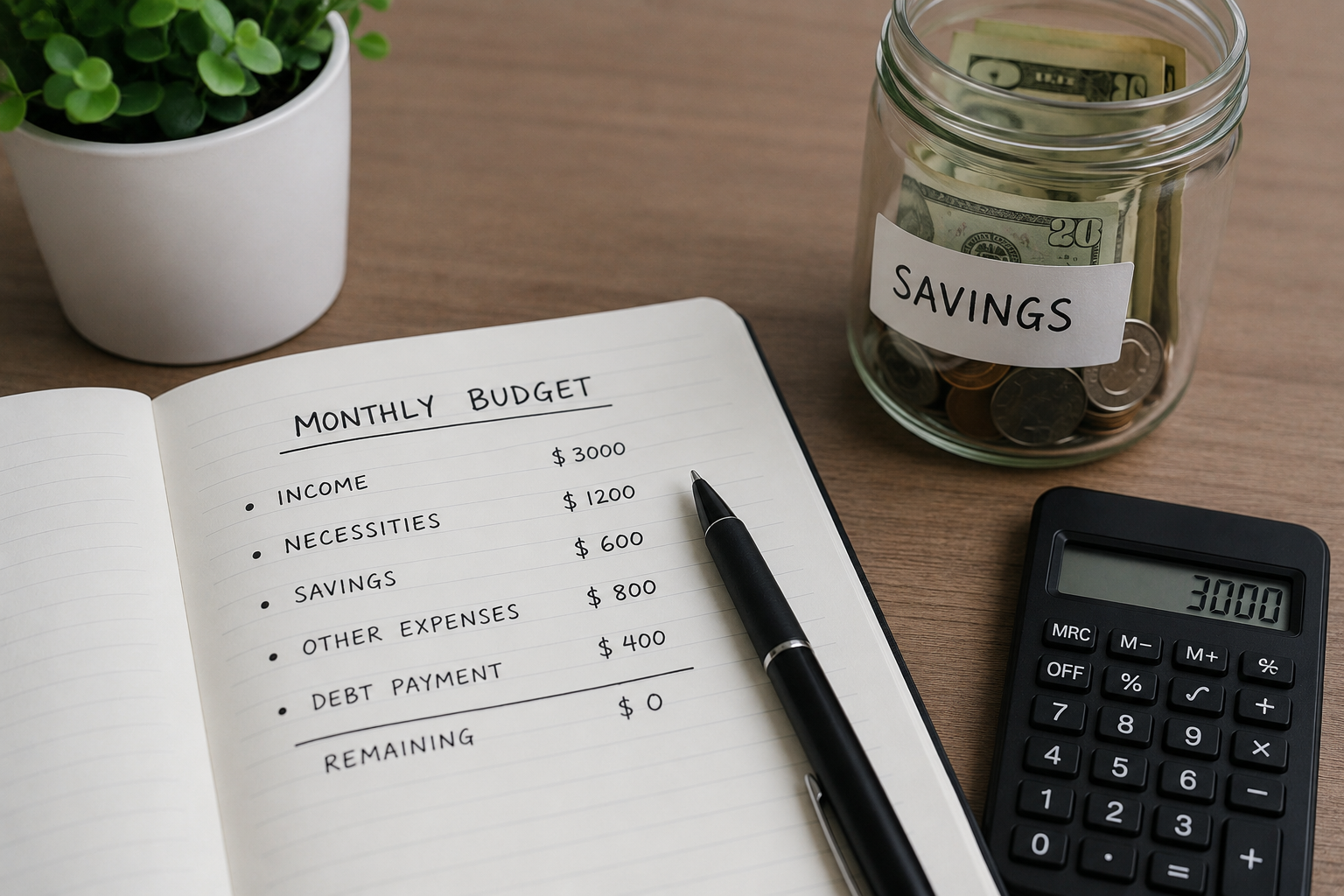
In January 2024, I deleted every budgeting app on my phone. Mint was gone. YNAB was gone. The spreadsheet I had lovingly built with color-coded categories was sent to the trash folder. I was tired of spending more time managing my money tools than actually managing my money.
Twelve months later, I had saved $3,200 more than the previous year. Not because I earned more — my income was almost identical. I saved more because I finally found a system simple enough that I actually stuck with it.
This guide is that system. No apps. No spreadsheets. No subscriptions. Just a notebook, a pen, and a method that takes less than 10 minutes per week. I will show you exactly what I did, the mistakes I made along the way, and how you can adapt this to your own life starting today.
Why Complex Tools Fail Most People
I spent three years bouncing between budgeting apps. Each one promised to “revolutionize” my finances. Each one lasted about six weeks before I abandoned it.
The problem was never the apps themselves. The problem was the friction. Every time I bought coffee, I had to pull out my phone, open the app, categorize the transaction, and watch my “dining out” budget shrink. It turned every purchase into a guilt trip. Worse, when I missed logging a few transactions, the entire budget became useless. I would look at my “remaining balance” and know it was a lie.
According to the Consumer Financial Protection Bureau, successful financial planning requires budgeting, goal setting, and building knowledge — not complex software. The DFPI’s 2026 financial planning guide emphasizes evaluating your current situation and setting clear goals as the foundation before any tool enters the picture. I learned this the hard way: the best budget is the one you actually use.
The Method: The 50/30/20 Rule on Paper
The system I use is a stripped-down version of the 50/30/20 rule, popularized by Senator Elizabeth Warren and her daughter Amelia Warren Tyagi in their book “All Your Worth.” The rule splits your after-tax income into three categories: 50% for needs, 30% for wants, and 20% for savings and debt repayment.
But here is what most guides do not tell you: the percentages are guidelines, not handcuffs. When I started, my rent alone ate up 42% of my income. I could not magically reduce that. So I adjusted. I aimed for 50% needs, 25% wants, and 25% savings. The key is the structure, not the exact math.
My Monthly Income Split (Example: $3,000/month)
- Needs: $1,500 (50%) — Rent, groceries, utilities, transport
- Wants: $750 (25%) — Dining out, subscriptions, hobbies
- Savings: $750 (25%) — Emergency fund, debt payoff
Investopedia notes that the 50/30/20 rule is a template intended to help individuals manage their money by balancing necessities with saving for emergencies and retirement. It works because it is intuitive and straightforward — which is exactly why it thrives on paper, not in software.
Step-by-Step: How I Set Up My System in 30 Minutes
Look at your last three pay stubs. Find the amount that actually hits your bank account — not your gross salary. If your income varies, average the last three months. Write this number at the top of your notebook. Mine was $2,847 per month. I rounded down to $2,800 to give myself a small buffer.
Gross monthly income: $3,400
After taxes and deductions: $2,847
Number I budget with: $2,800
Needs are expenses you cannot live without: rent, minimum debt payments, groceries, utilities, insurance, basic transport. I listed mine and added them up. The total shocked me — I was spending 48% on needs alone, before I even bought food.
Here is where honesty matters. Your Netflix subscription is not a need. Your gym membership is not a need unless it is medically prescribed. Your daily coffee is not a need. Be ruthless. I cut my “needs” list from 14 items to 9.
For 30 days, I carried my notebook everywhere. Every time I spent money, I wrote it down: the date, the amount, and what it was for. No categories yet. Just raw data. This was uncomfortable. I discovered I was spending $89 per month on convenience store snacks I did not remember buying.
At the end of the month, I sorted every expense into “Needs,” “Wants,” or “Savings.” The results were eye-opening. I was spending 38% on wants, not 30%. My savings rate was 14%, not 20%. The numbers did not lie — my habits did.
Based on my tracking month, I set realistic targets for the next month. I did not try to flip from 38% wants to 25% overnight. I aimed for 33% wants and 17% savings. Small steps.
I wrote these targets on the first page of my notebook and checked them every Sunday evening. The weekly check-in took 8 minutes. That was it. No daily app notifications. No guilt. Just a quick review and an adjustment if needed.
This was the single most important change. I set up an automatic transfer of $400 to my savings account on the day after payday. That money disappeared before I could touch it. The 50/30/20 rule treats savings as a target, but I treated it as a bill—non-negotiable.
Once the transfer was automatic, I only had to manage the remaining $2,400. Psychologically, this was easier. I was not “saving” anymore. I was just living on what I had.
My Actual Monthly Budget (Real Numbers)
To show you this is not theory, here is my actual budget from March 2025. I live in a mid-sized city, earn a modest writing income, and have no dependents. Your numbers will differ, but the structure is what matters.
| Category | Amount | % of Income | Notes |
|---|---|---|---|
| NEEDS (Target: 50%) | |||
| Rent | $950 | 34% | One-bedroom apartment, utilities included |
| Groceries | $280 | 10% | Weekly shop, meal planning |
| Transport | $120 | 4% | Bus pass + occasional rideshare |
| Phone & Internet | $85 | 3% | Basic plan, no extras |
| Insurance | $65 | 2% | Renter’s + basic health |
| Total Needs | $1,500 | 53% | Slightly over, acceptable |
| WANTS (Target: 25%) | |||
| Dining Out | $120 | 4% | Twice per week, budgeted |
| Subscriptions | $45 | 2% | Netflix + Spotify, down from 5 services |
| Hobbies | $80 | 3% | Books, occasional events |
| Miscellaneous | $105 | 4% | Buffer for unexpected wants |
| Total Wants | $350 | 13% | Well under target — extra to savings |
| SAVINGS & DEBT (Target: 25%+) | |||
| Emergency Fund | $400 | 14% | Auto-transferred on payday |
| Extra Debt Payment | $200 | 7% | Student loan, above minimum |
| Leftover from Wants | $397 | 14% | Under-spent on wants, moved to savings |
| Total Savings | $997 | 35% | Far exceeded 20% target |
The Weekly Habit That Makes It Stick
Every Sunday at 7 PM, I spend 8 minutes doing three things:
- Check my bank balance and compare it to my notebook estimate. If they differ, I find the missing expense and write it down.
- Review the week’s spending against my targets. Not to punish myself — just to notice patterns. “I spent $40 on delivery this week. That is $20 over my weekly dining average.”
- Plan the week ahead. Any known expenses? Birthdays, bills, travel? I write them down so they do not surprise me.
That is it. Eight minutes. Less time than I used to spend scrolling through app notifications. The DFPI recommends reviewing your financial plan regularly to stay on track, and this weekly ritual does exactly that without complexity.
What I Cut (And What I Kept)
The biggest myth about budgeting is that it means giving up everything you enjoy. I did not stop eating out. I did not cancel every subscription. I just got intentional.
What I cut:
- Three streaming services I was not watching ($37/month)
- A gym membership I used twice in six months ($55/month)
- Impulse convenience store visits (averaged $89/month)
- Upgraded phone plan I did not need $25/month.
What I kept:
- My Spotify subscription—music is non-negotiable for my work
- Weekly coffee shop visits — but budgeted, not spontaneous
- My book budget—actually increased it by $20 because I cut streaming
The total “sacrifice” was $206 per month. The psychological gain was far larger. I stopped feeling guilty about spending because every dollar had a purpose.
Mistakes I Made (So You Can Avoid Them)
Mistake 1: Trying to be perfect from day one. My first month, I aimed for exact 50/30/20 splits. I failed. I felt like a failure. I almost quit. Start with directionally correct numbers and refine over three months.
Mistake 2: Not accounting for irregular expenses. I forgot about my car insurance renewal ($420) and my mother’s birthday ($60). Now I keep a “irregular expenses” list on my notebook’s back page and divide annual costs by 12.
Mistake 3: Comparing my numbers to online examples. Every budget guide shows someone earning $5,000/month. I earn less than $3,000. Comparing myself to those numbers made me feel poor. Your budget only needs to work for you.
Mistake 4: Skipping the tracking month. I tried to budget without knowing where my money was going. It was like trying to navigate without a map. The one-month tracking phase is non-negotiable. Do not skip it.
When to Consider Adding a Tool Back
This method is designed to be tool-free, but there are situations where a simple tool helps:
- Variable income: If you freelance or have irregular income, a simple spreadsheet to average your last six months can help. But still keep the notebook for daily tracking.
- Shared finances: If you budget with a partner, a shared Google Sheet for the monthly overview plus individual notebooks works well.
- Investment tracking: Once your emergency fund is solid and you start investing, a basic spreadsheet to track portfolio performance is reasonable. But your daily spending? Keep it on paper.
Wealthsimple and other financial platforms note that budgeting apps can help, but the key is consistency — not the specific tool. If you eventually want an app, choose one that supports manual entry without bank linking, like MoneyPeas or Goodbudget, to maintain the awareness that paper gives you.
Your First 30 Days: A Starter Plan
Here is exactly how to start this system today, even if you have never budgeted before:
31. Sort expenses into Needs/Wants/Savings. Calculate percentages. 30 minutes
| Day | Action | Time Required |
|---|---|---|
| 1 | Buy a notebook. Write your after-tax income at the top. | 5 minutes |
| 2 | List every necessary expense. Be brutal about what counts. | 20 minutes |
| 3–30 | Write down every expense. Date, amount, description. | 30 seconds per purchase |
| 32 | Set next month’s targets. Automate savings transfer. | 15 minutes |
| Every Sunday | 8-minute weekly review: balance, patterns, upcoming expenses. | 8 minutes |
- Consumer Financial Protection Bureau. (2025). Financial Empowerment Toolkit. Referenced in DFPI 6-Step Financial Plan for 2026. Retrieved from dfpi.ca.gov
- California Department of Financial Protection and Innovation. (2026). 6-Step Financial Plan for 2026. Retrieved from dfpi.ca.gov
- Investopedia. (2025). The 50/30/20 Budget Rule Explained With Examples. Retrieved from investopedia.com
- Wealthsimple. (2026). How to Follow the 50/30/20 Rule. Retrieved from wealthsimple.com
- UNFCU. (2025). Budgeting Basics: The 50-30-20 Rule. Retrieved from unfcu.org
- Warren, E. & Tyagi, A. W. (2005). All Your Worth: The Ultimate Lifetime Money Plan. Free Press. (Original source of 50/30/20 rule)
- Zurich Insurance. (2026). 50-30-20 Rule in Budgeting. Retrieved from zurich.ie
- HSBC UK. (2025). What Is the 50-30-20 Budget Rule? Retrieved from hsbc.co.uk

Abdul Rahman is a digital lifestyle writer and researcher who focuses on productivity, smart technology, personal finance, and practical home improvement tips. Through ZapKido, he shares simple, beginner-friendly guides designed to help readers build smarter habits, improve daily efficiency, and live a more organized digital life.