
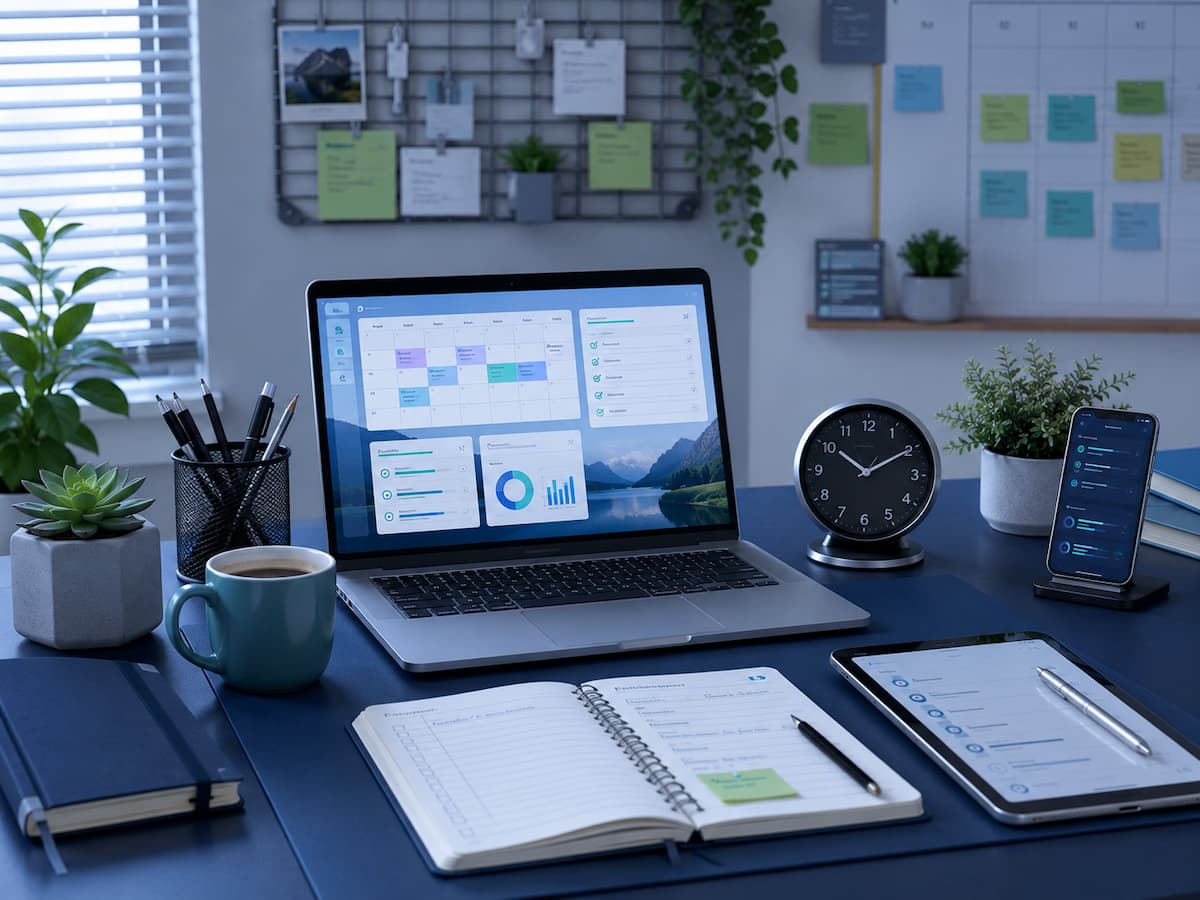
When you repeat small productivity habits consistently, they can have a powerful impact. A few minutes spent planning your day, organizing your workspace, reducing distractions, or reviewing your progress can save hours of wasted effort later. This guide explains practical daily productivity habits that beginners can easily maintain. You will learn how to build realistic routines, improve focus, manage tasks better, and create a system that helps you accomplish important goals without feeling overwhelmed.
Why Simple Productivity Habits Work Better
Productivity is often misunderstood as working longer hours or completing a large number of tasks. In reality, true productivity means using your time and energy wisely to complete meaningful work. Simple habits are easier to maintain because they require less effort and decision-making. When a useful action becomes automatic, you no longer need to spend extra mental energy deciding whether to do it.
| Complicated Approach | Simple Productivity Habit |
|---|---|
| Creating a huge daily task list | Choosing the most important priorities |
| Using many productivity tools | Keeping one simple system |
| Working without breaks | Using focused work periods |
| Trying to change everything | Improving one habit at a time |
The best productivity system is not the most complex one. It is the one you can continue using consistently.
Start Your Day With a Clear Plan
One of the easiest productivity habits is planning your day before starting important tasks. Without a clear direction, many people spend their time reacting to messages, notifications, and unexpected requests. A simple daily plan helps you understand what needs attention and prevents important tasks from being forgotten.
A simple morning planning method
- Review your main responsibilities.
- Select three important tasks.
- Estimate how much time each task requires.
- Identify possible distractions.
Your plan does not need to be perfect. The purpose is to create direction and make better decisions throughout the day.
Tip: A short realistic plan is more useful than a long list of tasks you cannot complete.
Prioritize Important Tasks First
Many people stay busy all day but make little progress because they focus on easy tasks instead of important ones. Productivity improves when you learn to separate urgent activities from valuable activities. Start by identifying tasks that create the biggest impact. Completing these tasks early can reduce stress and create momentum.
| Task Type | Example |
|---|---|
| High Importance | Completing a major project |
| Routine Task | Checking regular emails |
| Low-Value Activity | Unnecessary browsing |
Learning to prioritize helps you protect your time and focus on what truly matters.
Create a Distraction-Free Environment
Your environment strongly affects your ability to concentrate. Even small distractions can interrupt your focus and make tasks take longer.
Reduce common distractions
- Turn off unnecessary notifications.
- Keep your workspace organized.
- Close unused browser tabs.
- Create specific times for checking messages.
A clean environment does not mean everything must be perfect. It simply means removing unnecessary obstacles that make concentration harder.
Warning: Constant notifications can train your brain to switch attention frequently, making deep focus more difficult.
Use Time More Effectively
Time management is not about filling every minute of the day. It is about using available time intentionally. Many productive people use simple techniques such as time blocking, where they assign specific periods for certain activities. For example, someone may reserve the morning for focused work and the afternoon for meetings or communication.
| Time Management Method | Purpose |
|---|---|
| Time Blocking | Creates dedicated periods for tasks |
| Task Batching | Groups similar activities together |
| Daily Planning | Creates clear priorities |
The best method is the one that fits your lifestyle and responsibilities.
Build Better Digital Organization Habits
Digital clutter can reduce productivity just like physical clutter. A disorganized computer, overflowing inbox, or scattered files can waste valuable time.
Simple digital organization habits
- Create clear folders for important files.
- Regularly delete unnecessary documents.
- Use consistent file names.
- Organize email messages with labels or folders.
A few minutes of digital organization each day can prevent larger problems in the future.
Take Regular Breaks for Better Focus
Many people believe productivity means working continuously for long periods. However, the brain needs recovery time to maintain attention and performance. Short breaks allow you to reset your focus and return to tasks with better concentration.
Healthy break ideas
- Stand up and move around.
- Drink water.
- Look away from screens.
- Take a short walk.
The goal is not avoiding work. The goal is maintaining the energy needed to do quality work.
Improve Your Daily Energy Management
Productivity depends not only on time but also on energy. Two people may have the same schedule but different results depending on their focus and energy levels. Simple lifestyle habits such as maintaining a consistent sleep schedule, staying hydrated, and taking care of personal well-being can support better daily performance.
| Habit | Productivity Benefit |
|---|---|
| Good sleep routine | Improves concentration |
| Regular movement | Supports energy levels |
| Balanced meals | Helps maintain steady energy |
Review Your Progress Regularly
A simple review habit helps you understand what is working and what needs improvement. Without reflection, people often repeat the same mistakes.
Daily review questions
- What did I accomplish today?
- What slowed me down?
- What should I improve tomorrow?
Regular reviews create awareness and help you gradually improve your productivity system.
Common Productivity Mistakes to Avoid
Many productivity problems come from unrealistic expectations rather than a lack of effort.
- Trying to complete too many tasks.
- Ignoring the importance of rest.
- Changing systems too frequently.
- Confusing busyness with progress.
- Relying too much on productivity apps can be a problem.
A sustainable productivity approach focuses on consistency rather than perfection.
FAQs
1. What is the easiest productivity habit to start?
Planning your day is one of the easiest habits to begin. Spending a few minutes identifying important tasks can create better focus and reduce confusion throughout the day.
2. How long does it take to build productivity habits?
The time required depends on the person and the habit. The most important factor is consistency. Small actions repeated regularly become easier over time.
3. Do productivity apps make people more productive?
Productivity apps can help with organization, but they are only tools. A simple system used consistently is often more effective than using many complicated applications.
4. How can I stop getting distracted?
Reduce unnecessary notifications, create focused work periods, and keep your workspace organized. Managing distractions is easier when you design your environment intentionally.
5. Should I work longer hours to become more productive?
Working longer does not always improve results. Better productivity usually comes from improved focus, planning, and smarter use of time.
Conclusion
You don’t need to make daily productivity habits complicated. Small actions like planning your day, prioritizing important tasks, reducing distractions, organizing information, and reviewing progress create meaningful improvements over time.
The key to long-term productivity is building a system that fits your life. Instead of chasing perfect routines, focus on simple habits that you can maintain consistently. By making small improvements every day, you can become more organized, focused, and effective without creating unnecessary stress.
References
- American Psychological Association – Research on Attention and Habits
- Harvard Business Review – Productivity and Workplace Research
- National Institute of Mental Health – Digital Wellness Resources
- Microsoft Work Trend Index – Productivity and Work Research

Abdul Rahman is a digital lifestyle writer and researcher who focuses on productivity, smart technology, personal finance, and practical home improvement tips. Through ZapKido, he shares simple, beginner-friendly guides designed to help readers build smarter habits, improve daily efficiency, and live a more organized digital life.